
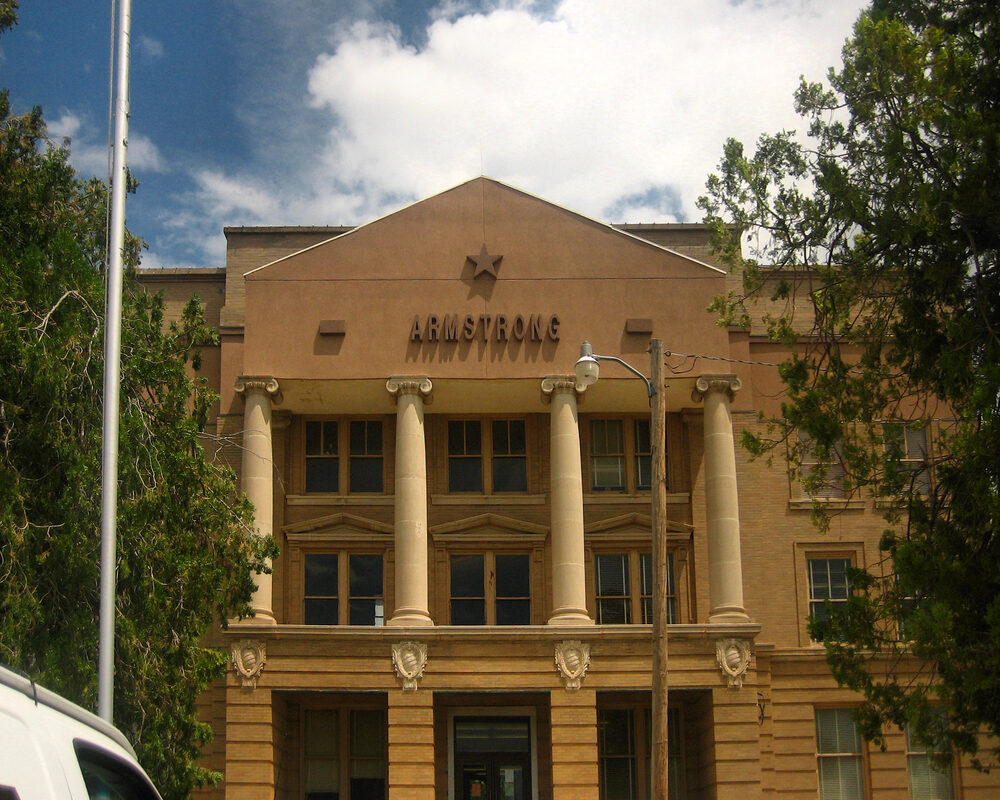
Crusoe said on Sept. 28, 2026, that it is the developer of Google's AI data center campus under construction in Armstrong County, Texas, outside Amarillo. In its announcement, Crusoe said the campus has direct connections to two adjacent wind farms owned by Serena, one operating and one still being built. Google had announced plans for an Armstrong County data center in November 2025, according to Data Center Frontier.
Construction broke ground in June 2025 and is under way, with more than 5,500 skilled laborers on site daily, Crusoe said. Chief executive Chase Lochmiller compared the pace with Crusoe's work in Abilene, also in Texas: "We broke ground in June 2025 and are building at the same swift pace we set in Abilene."
Power from the Goodnight wind farms
The power arrangement takes up most of Crusoe's announcement. The company said the campus connects directly to Serena's Goodnight 1 wind farm, a 265.5-MW facility that is already operating, and to Goodnight 2, a second 265.5-MW project now under construction. Crusoe said its development at the site helped catalyze Goodnight 2.
Those 265.5-MW figures are each wind farm's generating capacity, not the data center's load. When wind output exceeds what the campus uses, the surplus goes back to the grid, which Crusoe said benefits local ratepayers and reduces curtailment of West Texas wind energy. The company described the approach as building AI facilities at the energy source to "both improve utilization of existing assets as well as catalyze new energy generation."
Crusoe, which calls itself "the AI factory company," presented the campus as an example of an energy-first strategy. "Building the future of AI requires a new kind of infrastructure, starting with energy," Lochmiller said in the release.
Cooling and water
Crusoe said the campus uses a closed-loop, non-evaporative liquid cooling system. The company said the system is designed to "significantly limit the facility's water footprint to primarily domestic uses such as kitchens."
Local energy-fund work
Crusoe's release also points to work in Armstrong County backed by Google's Texas Energy Impact Fund, which it said recently announced support for efficiency upgrades in public buildings and homes in the county. Google announced the fund's first recipients on May 21, 2026, as part of a $30 million commitment to energy resilience and affordability in Texas.
In Google's description, The Energy Management Alliance (TEMA) is expanding energy-manager training to rural communities and funding efficiency upgrades in public buildings in Armstrong, Ellis, Haskell and Wilbarger counties. In the same four counties, Solar United Neighbors (SUN), the Texas Energy Poverty Research Institute (TEPRI) and TEMA are providing pre-weatherization, which Google defines as home repairs to increase energy savings, health and safety. Google's post presents these as grants to the named organizations; the link between the Armstrong County work and the campus comes from Crusoe's release.
Context
Crusoe said the Armstrong County campus is part of a growing West Texas portfolio that includes two campuses under development in Abilene. Data Center Frontier included the announcement in an Oct. 12 roundup of North American projects disclosed in September. Others in that roundup include a Fluidstack project, disclosed in announcements on Sept. 10 and Sept. 21, in Cameron County, Texas, with a $4 billion first phase capable of supporting as much as 1.5 GW, and a new Lambda data center, announced Sept. 27, at the MidAmerica Industrial Park in Mayes County, Okla., near Chouteau.
What Happens Next
Construction continues on both the campus and Goodnight 2. Neither Crusoe nor Google has published a completion or energization date for the campus, and Crusoe's release gives no in-service date for Goodnight 2. The companies also have not disclosed the campus's electrical load, acreage, number of buildings or investment.
