
Envision announced on Nov. 2, 2026 that an integrated 800-volt direct-current power system built around solid-state transformers is now powering live AI workloads at its Galaxy AI data center campus in Ulanqab, Inner Mongolia. In a press release distributed through PR Newswire, the company called it the world's first commercial deployment of such a system in a large-scale AI data center.
That "world first" label belongs to Envision. Energy News said the group presents the deployment as a world first, "a claim that has not been independently verified." Unite.AI also attributed the "world's first commercial use" wording to the company's announcement. None of the coverage reviewed for this article includes independent measurements of how the system performs.
This explainer covers what Envision says it built, the benefits it claims, and where the deployment sits within the industry's wider move toward 800V DC.
What Envision Says It Deployed
According to Envision's release, the system has three hardware layers working together.
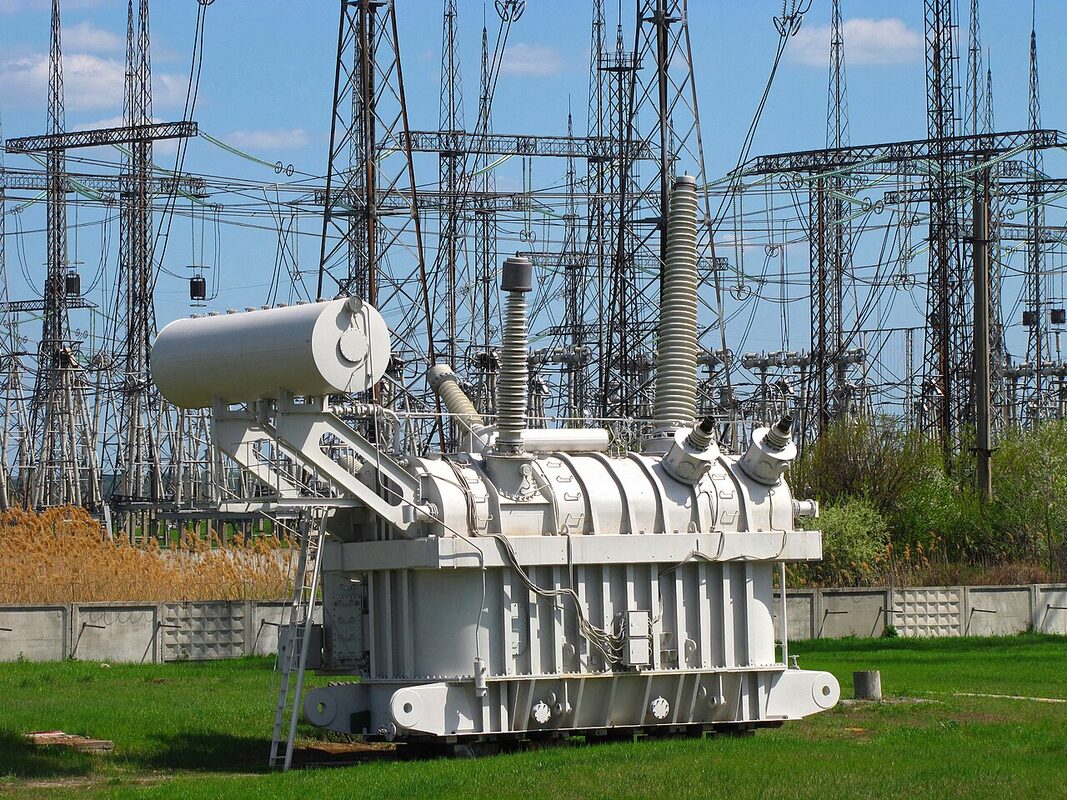
- Solid-state transformers (SSTs). These take incoming 10 kV medium-voltage power and convert it straight to an 800V DC bus. Best Magazine, a trade publication, likewise reported Envision's statement that the SSTs convert the incoming 10 kV AC supply directly to the 800V DC bus and that the system is powering live workloads at the Ulanqab campus.
- A battery energy storage system (BESS). Envision says the batteries provide "second-scale" power support and "minute-scale" backup.
- DC conversion equipment. This sits between the DC bus and the computing load. Energy News described it as equipment that adjusts direct-current voltage for computing hardware, within an end-to-end architecture combining SST and BESS.
Unite.AI's description of the deployment pairs these three layers with three capabilities that Envision says the integrated system provides.
The Control Layer and GPU Load Swings
The release puts much of its emphasis on control software. Envision says the SSTs and the battery storage are coordinated at the millisecond level to absorb load swings from GPUs. Rapid shifts in power draw as accelerator clusters move between computing phases are a known design concern for AI facilities. Envision says that coordination runs on its Dubhe Controller, which uses what the company calls the Dubhe Energy Foundation Model.
The release does not publish response-time measurements, load-swing amplitudes or test data. The millisecond figure is Envision's own description of how the system works. Best Magazine added that the company did not disclose the capacity or chemistry of the battery system, its backup duration or independently verified efficiency figures.
Kevin Huang, senior vice president of Envision Energy, is quoted in the announcement. The release presents the system as an integrated design rather than a collection of separate components.
The Claimed Benefits
As Unite.AI summarized them, Envision cites four advantages:
- higher "watt-to-bit" efficiency, meaning more of the incoming electricity reaches the computing hardware
- a smaller physical footprint for power equipment
- less cabling
- less copper
These are company claims. Neither the release nor the independent coverage reviewed here gives measured efficiency percentages, floor-area comparisons or copper savings against a reference design. Readers comparing Envision's architecture with other power designs should treat the benefits as stated goals until measured figures are published.
The basic idea behind the design is easy to follow. Best Magazine noted that higher-voltage DC architectures can reduce the number of conversion stages, lower current for a given power level and decrease requirements for copper cabling and electrical equipment. Converting medium-voltage AC directly to an 800V DC bus means fewer separate conversion and distribution steps between the utility feed and the rack. How much of that holds at the Ulanqab campus is the part that has not been independently checked.
Where 800V DC Fits in the Industry
Envision is not the only company working on 800V DC distribution. Best Magazine reported that Nvidia, Google and Microsoft are developing an 800V DC architecture through the Open Compute Project. It also reported that Nvidia expects the technology to support racks rated at 1 MW and above from 2027.
That context helps explain why a Chinese energy company's announcement matters to the global data center supply chain. Higher-voltage DC distribution is being designed for rack power densities well beyond what most facilities support today, so working deployments are useful reference points for operators, equipment makers and utilities. The available sources do not say whether Envision's system follows any Open Compute Project specification.
The Galaxy Campus and Mission Gobi
According to Envision, the Galaxy AI campus in Ulanqab began operations in August 2026. The company says the campus has a planned capacity of 3 GW and is designed to support up to one million AI accelerators at full build-out. Envision also says more than 80% of the campus's power is planned to come from direct renewable electricity connections.
The release places the campus within Envision's Mission Gobi initiative, which the company says targets 5 GW of green AI data center capacity in desert regions worldwide by 2030.
The sources do not say how much of the planned 3 GW is operating now, or how many accelerators run on the 800V DC system today rather than on other power infrastructure at the site. The announcement says the system is powering live workloads but does not give its capacity in megawatts.
What Remains Unverified
- The "world first" claim. Energy News reports that it has not been independently verified.
- Efficiency, footprint and materials savings. Envision cites these, but no measured figures appear in the sources.
- Deployed scale. The share of the campus's current load running on the 800V DC system is not disclosed.
- Control performance. The millisecond-level coordination is described by the company, and no test data is given.
What Happens Next
The sources do not name a specific next milestone for the 800V DC system at Ulanqab, such as an expansion phase, a third-party performance audit or a publication date for operating data. The forward-looking figures on the record are Envision's stated plans: build the Galaxy campus out to 3 GW and up to one million AI accelerators, and reach 5 GW under Mission Gobi by 2030. Separately, Best Magazine reports that Nvidia expects the 800V DC architecture under development through the Open Compute Project to support racks of 1 MW and above from 2027. DataCenterFeed will report independent performance data or third-party verification of Envision's claims if either is published.
Sources
- Envision press release (PR Newswire, Nov. 2, 2026): Envision Achieves World's First Commercial Deployment of Integrated 800V DC SST-Based Power System
- Best Magazine: Envision demonstrates integrated 800V DC power system at AI data centre
- Unite.AI: Envision Deploys SST-Based 800V DC Power at Ulanqab AI Data Center
- Energy News: Envision deploys an 800V DC solid-state transformer power system at its AI data center
