
FirstEnergy reported about 7.9 GW of contracted data center demand in its third-quarter earnings materials, published Oct. 27 as exhibits to a Form 8-K filed with the Securities and Exchange Commission. The company's strategic and financial highlights deck describes that figure as having nearly doubled since year-end 2025. The materials also describe a 19 GW pipeline behind the contracted load, about 4 GW of which is in active contract negotiations.
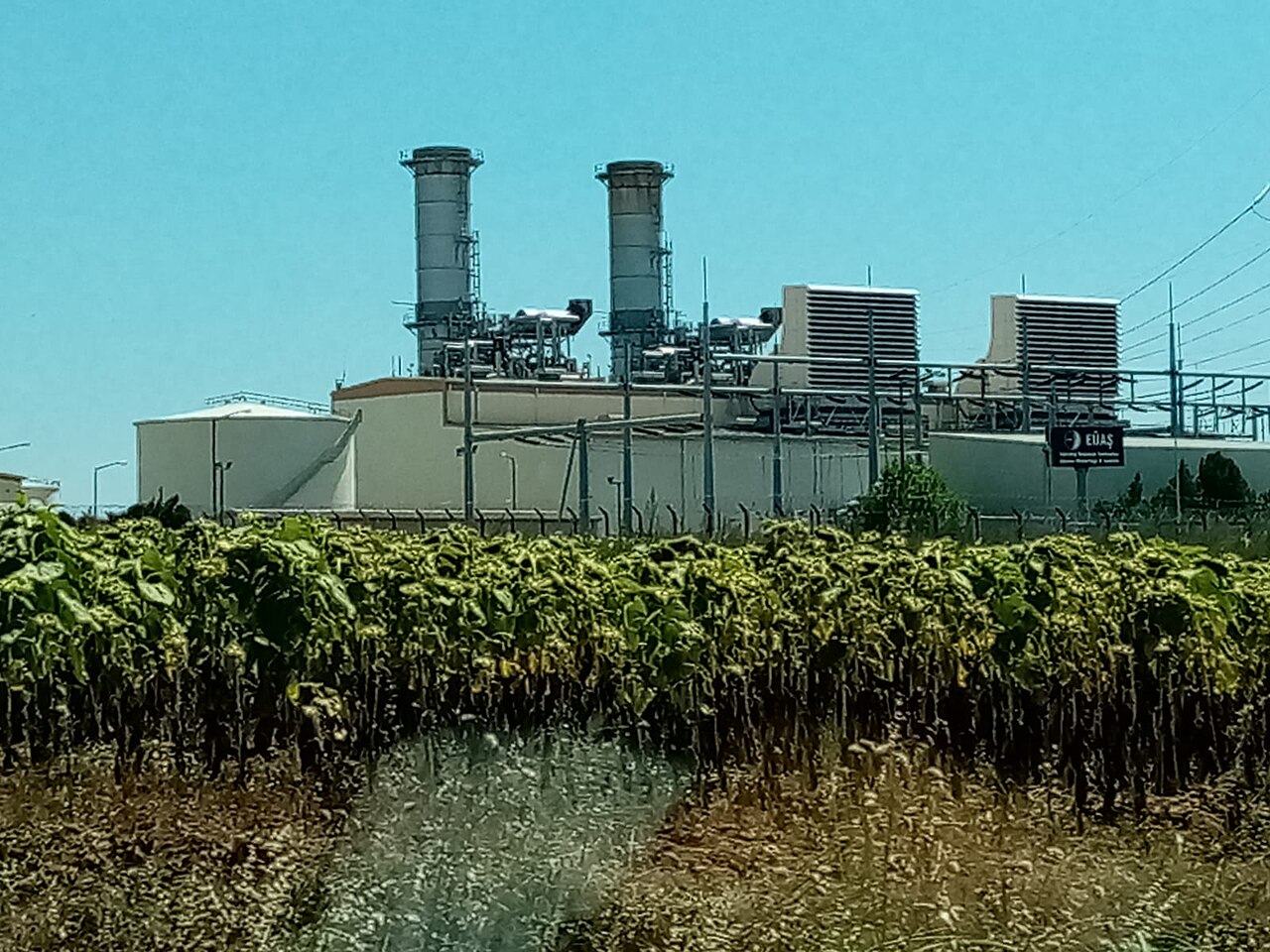
The materials tie those numbers to a generation and transmission plan: a proposed combined-cycle gas turbine (CCGT) plant at Maidsville, West Virginia, an initial request for proposals for another 3 GW of CCGTs, and a transmission budget the company says will grow by at least 25% over its current $19 billion plan.
The load numbers
FirstEnergy's strategic and financial highlights deck (Exhibit 99.2 to the 8-K) splits its data center outlook into contracted demand and pipeline demand, projected through 2036. Total demand reaches 26,950 MW by 2036 in the company's forecast, which the deck describes as roughly a 60% increase since year-end 2025. The deck shows a much smaller near-term figure of 2,190 MW for 2026, rising to 13,120 MW in 2031. The slides also list 117 GW of load studies that the company does not count in its pipeline.
The state-by-state table in the deck shows where the demand sits. Figures are in MW by 2036, contracted and then pipeline:
- Ohio: 2,570 contracted; 6,790 pipeline
- Maryland: 3,045 contracted; 1,585 pipeline
- Pennsylvania: 2,010 contracted; 3,400 pipeline
- West Virginia: 175 contracted; 5,870 pipeline
- New Jersey: 80 contracted; 1,425 pipeline
The contracted rows add up to 7,880 MW, the roughly 7.9 GW headline figure, and the pipeline rows to 19,070 MW, the roughly 19 GW pipeline. Maryland has the most contracted load of the five states. Ohio has the largest pipeline.
West Virginia looks very different from the other states. Almost all of its projected demand, 6,045 MW in total by 2036 in the deck, is pipeline rather than signed contracts. The deck says West Virginia pipeline demand increased about sixfold to roughly 6 GW this year, and 24/7 Wall St. repeated that figure in its earnings coverage. The outlet also described contracted data center demand as having nearly doubled since January.
What FirstEnergy plans to build
Maidsville CCGT. The deck says FirstEnergy has signed a reservation agreement for turbines for the proposed Maidsville combined-cycle plant and secured a 2030 delivery date. 24/7 Wall St. reported that the turbines are reserved through an agreement with Siemens. That supplier name appears in the outlet's account but not in the slides DataCenterFeed reviewed. The company says it expects approval of a certificate of public convenience and necessity (CPCN) for the project, and a regulatory order, in the fourth quarter of 2026. The regulatory calendar in the deck lists the CPCN as filed Feb. 13, 2026, with hearings held July 16 and 17. The deck also says FirstEnergy is negotiating with a data center customer to be the long-term off-taker of the plant's output. It does not name the customer.
Another 3 GW of combined-cycle capacity. FirstEnergy says it has issued an initial request for proposals for an additional 3 GW of CCGTs and expects to give an update in early 2027. The deck presents this under additional West Virginia generation investment opportunities. It does not identify sites.
Bridge and behind-the-meter power. The deck says the company is exploring near-term bridge power options and temporary behind-the-meter solutions. The slides give no capacity figures for them.
Transmission: the $250 million-per-gigawatt rule of thumb
FirstEnergy says it expects to increase transmission investment by at least 25% versus its current $19 billion plan, measured over 2027 through 2031. The deck gives a general rule of thumb of about $250 million in transmission network upgrades for each gigawatt of data center demand. It adds that upgrades tied to contracted demand signed since February 2026 are not included in the 2026-2030 investment plan. At that rule of thumb, the 7.9 GW of contracted demand would imply roughly $2 billion in upgrades, though that multiplication is DataCenterFeed's arithmetic and not a figure from the company, and the rule is a general estimate rather than a cost for any particular project.
The transmission spending sits inside a larger budget. FirstEnergy's materials cite a $36 billion capital plan for 2026 through 2030 and a 10.4% compound annual growth rate in rate base. Panabee reported that the company deployed $4.9 billion of capital in the first nine months of the year, a figure the deck also gives. The deck's long-term plan slide says FirstEnergy expects to roll the plan forward with a comprehensive update in February 2027, reflecting at least a 25% increase in transmission investment, and to fund up to 35% of incremental investments with equity or equity-like content. It also says 75% of projected investments are in formula-rate recovery.
The quarter's financial results
Panabee and 24/7 Wall St. both reported third-quarter core earnings per share of $0.98, a figure the deck also shows. Panabee compared that with $0.83 a year earlier. 24/7 Wall St. compared it with an analyst estimate of $0.90. 24/7 Wall St. put revenue at $4.56 billion against an estimate of $4.29 billion. Panabee reported revenue of about $4.6 billion, up 12% from $4.1 billion.
The company's deck reports year-to-date core EPS of $2.20, 9% above 2025. FirstEnergy reaffirmed its 2026 core EPS guidance range of $2.62 to $2.82. Panabee also noted that the company continues to operate under the 2021 Deferred Prosecution Agreement.
FirstEnergy's own news release (Exhibit 99.1) consists mostly of financial tables and forward-looking-statement disclosures. The data center figures in this article come from the strategic and financial highlights deck.
Ohio's regulatory track
In Ohio, FirstEnergy's regulatory calendar lists two proceedings that affect data center customers. The first is a proposed Ohio data center tariff, filed June 12, 2026, with comments filed Aug. 6 and reply comments filed Aug. 25. The second is the company's proposed three-year Ohio rate plan, which is moving through the Public Utilities Commission of Ohio (PUCO). The application was filed May 22, 2026 and deemed complete July 1. The deck does not describe the terms of the data center tariff. Ohio has the largest data center pipeline in FirstEnergy's territory, 6,790 MW by 2036 in the company's figures, plus 2,570 MW contracted.
What Happens Next
FirstEnergy's materials list these scheduled steps:
- Fourth quarter 2026: The company expects a West Virginia regulatory order and CPCN approval for the Maidsville CCGT. It is negotiating with a data center customer to be the plant's off-taker.
- Nov. 30, 2026: The PUCO Staff Report on FirstEnergy's proposed three-year Ohio rate plan is due.
- Feb. 22, 2027: PUCO Staff testimony on the Ohio rate plan is due.
- March 1, 2027: Evidentiary hearings on the Ohio rate plan are scheduled to begin.
- Early 2027: FirstEnergy expects to give an update on its request for proposals for an additional 3 GW of CCGTs.
- 2030: Delivery of the Maidsville turbines is scheduled under the reservation agreement.
The proposed Ohio data center tariff, filed June 12, 2026, remains on the company's regulatory calendar. The materials reviewed do not give a decision date for it.
Sources
- FirstEnergy Corp. 8-K Exhibit 99.2: 3Q 2026 Earnings Summary, Strategic & Financial Highlights (Oct. 27, 2026)
- FirstEnergy Corp. 8-K Exhibit 99.1: Third Quarter 2026 news release (Oct. 27, 2026)
- FirstEnergy Q3 2026: AI Data Center Demand Powers an EPS Beat (24/7 Wall St., Oct. 27, 2026)
- FirstEnergy Q3 Earnings: 9% EPS Growth and $36B Capital Deployment (Panabee, Oct. 27, 2026)
