
Iren, the Australian-incorporated operator moving its Childress, Texas, campus from bitcoin mining to AI cloud capacity, has told investors that a change Microsoft asked for will push back part of its contracted buildout. Some capacity the company had targeted for Dec. 31, 2026 is now expected in the following quarter.
The company disclosed the change in its Form 10-Q for the quarter ended Sept. 30, 2026. Executives went into more detail on the company's Nov. 5 earnings call. According to DatacenterDynamics' account of the call, co-CEO Daniel Roberts said the company had said in July that more than $4 billion of operating annual recurring revenue (ARR) was targeted to be online by year-end. That target has moved to January. If suppliers deliver late, he said, it could run to the end of February.
What the filing says
The 10-Q separates what Microsoft has already accepted from what is still under construction. According to the filing, Horizon 1 was delivered to and accepted by Microsoft in August 2026 and remains in service.
For the Horizon deployments, the filing says that "at Microsoft's request" Iren is implementing a network design change. Under the agreement, delivery dates are extended without delay credits for delays resulting from a Microsoft-requested change. The filing adds that the change is being implemented in parallel with discussions about delivery dates and how fees, credits and cost reimbursements will be applied and paid.
The risk factors section gives more than one reason for the timing shift. It says certain contracted capacity targeted for delivery by Dec. 31, 2026 is now expected during the following quarter because of a customer-requested design change, supply timing and third-party delays, and that there can be no assurance the capacity will be completed on the revised timeline. The redesign is not the only factor the company names.
The filing also shows how far the revenue mix has moved. Iren reported AI Cloud Lease revenue of $65 million in the quarter, up from nil a year earlier. Bitcoin Mining revenue was $28 million, down from $233 million in the year-earlier quarter. Total revenue was $228 million against $240 million a year earlier. The 10-Q also records amortization from the Mirantis acquisition, which the company completed on Aug. 3, 2026.
What the network change is for
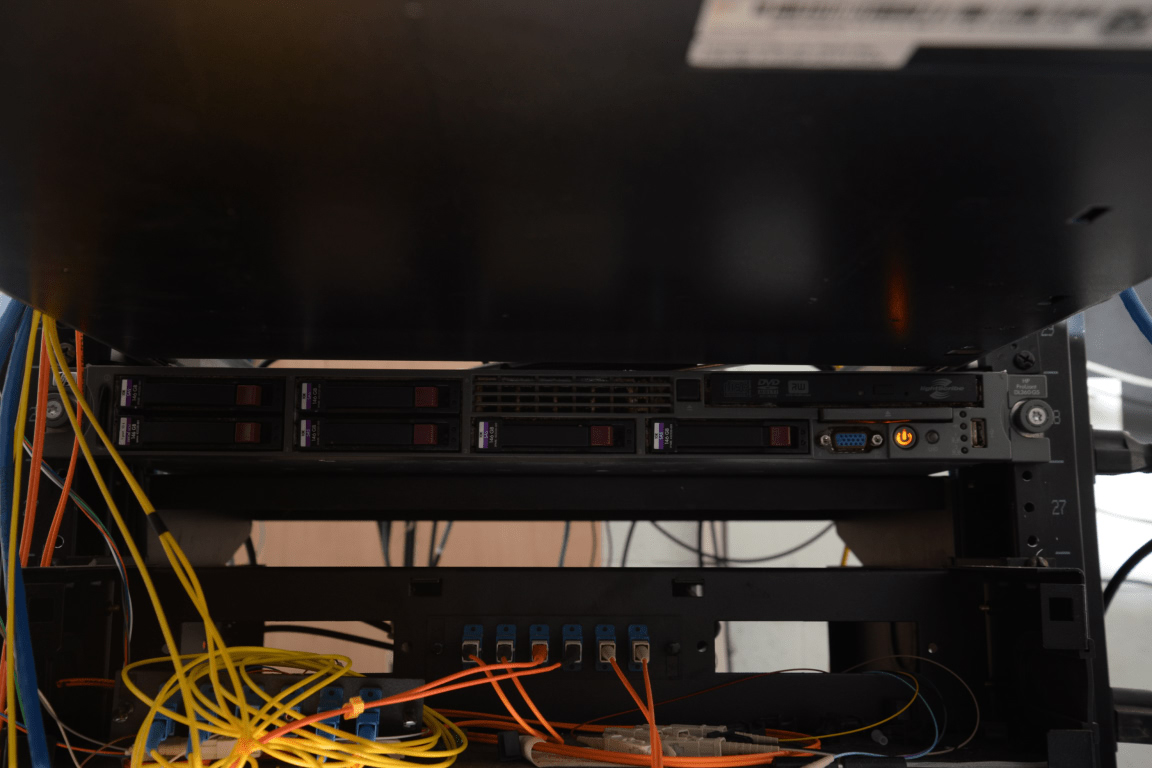
On the call, Roberts said that after Horizon 1 was handed over, Microsoft "made a request to reconfigure and upgrade some of the network infrastructure." According to DCD's report, the purpose was to enable 200 MW of capacity to serve the latest generation of frontier models. Roberts said the company agreed, adding that "there will be a small delay." He described the capital spending related to the upgrades as "immaterial against the backdrop of the capex for the broader cluster."
Iren also gave a status update on each building block at Childress, as DCD reported it:
- Horizon 2: built, with power on at the rack in all three halls and Dell carrying out commissioning.
- Horizon 3: GPUs on site and all three halls energized.
- Horizon 4: GPUs being delivered in the coming weeks.
According to DCD, Iren has 100 MW live now and will have 300 MW operational once the capacity comes online.
The larger balance sheet
Iren also restated the scale it is building toward. According to DCD, the company says it has more than 5 GW of secured power and 30,000 acres of land secured. It says it raised $19 billion in the 12 months to September, including $6.5 billion of GPU financing since May at rates of 6% to 9.5%. Iren also says its AI cloud ran with an 86% gross margin. These are company figures as reported by DCD, not independently verified numbers.
The size of that financing explains why commissioning dates draw attention. The 10-Q says revenue generally begins only upon customer acceptance, while financing and other costs continue to be incurred. Under the terms the 10-Q describes, delivery dates are extended without delay credits for delays resulting from the Microsoft-requested change. The filing still leaves fees, credits and cost reimbursements under discussion.
An outside view of the site
Iren's disclosure followed a third-party report about delivery timing at Microsoft-linked projects. RuntimeWire, citing Business Insider, reported on Nov. 4 that Aterio's Oct. 21 flyover found unfinished work at Iren's Texas campus. RuntimeWire also reported that Business Insider said Aterio estimates roughly 140 MW at Nebius's New Jersey project could slip into 2027.
RuntimeWire framed a visible construction lag as a test of whether Iren and Nebius can convert their Microsoft contracts into accepted, revenue-producing data centers on hyperscaler timelines. The flyover findings are Aterio's, not statements by Iren. Iren's own filing gives the customer-requested design change, supply timing and third-party delays as the reasons for the new schedule.
Why it matters beyond Iren
For utilities and officials in places like Childress, the case shows how a project's timeline can change after power and buildings are in place. According to the company, Horizon 2's halls are powered and Horizon 3's are energized, and Roberts said the data centers are practically done while the company waits for remaining equipment to finish commissioning.
For the industry, the 10-Q shows a contract mechanism that rarely becomes public. When the customer asks for the change, delivery dates move without delay credits. Who pays for the change remains open: the filing says discussions on fees, credits and cost reimbursements are ongoing.
What Happens Next
The next steps the sources describe are equipment arrivals and commissioning at Childress. Roberts said the more than $4 billion operating ARR target, previously set for year-end, is now targeted for January and could run to the end of February if suppliers are late, according to DCD. Horizon 4 GPUs are arriving in the coming weeks, according to the company. Separately, the 10-Q says Iren and Microsoft are still discussing delivery dates and how fees, credits and cost reimbursements will be applied and paid.
