
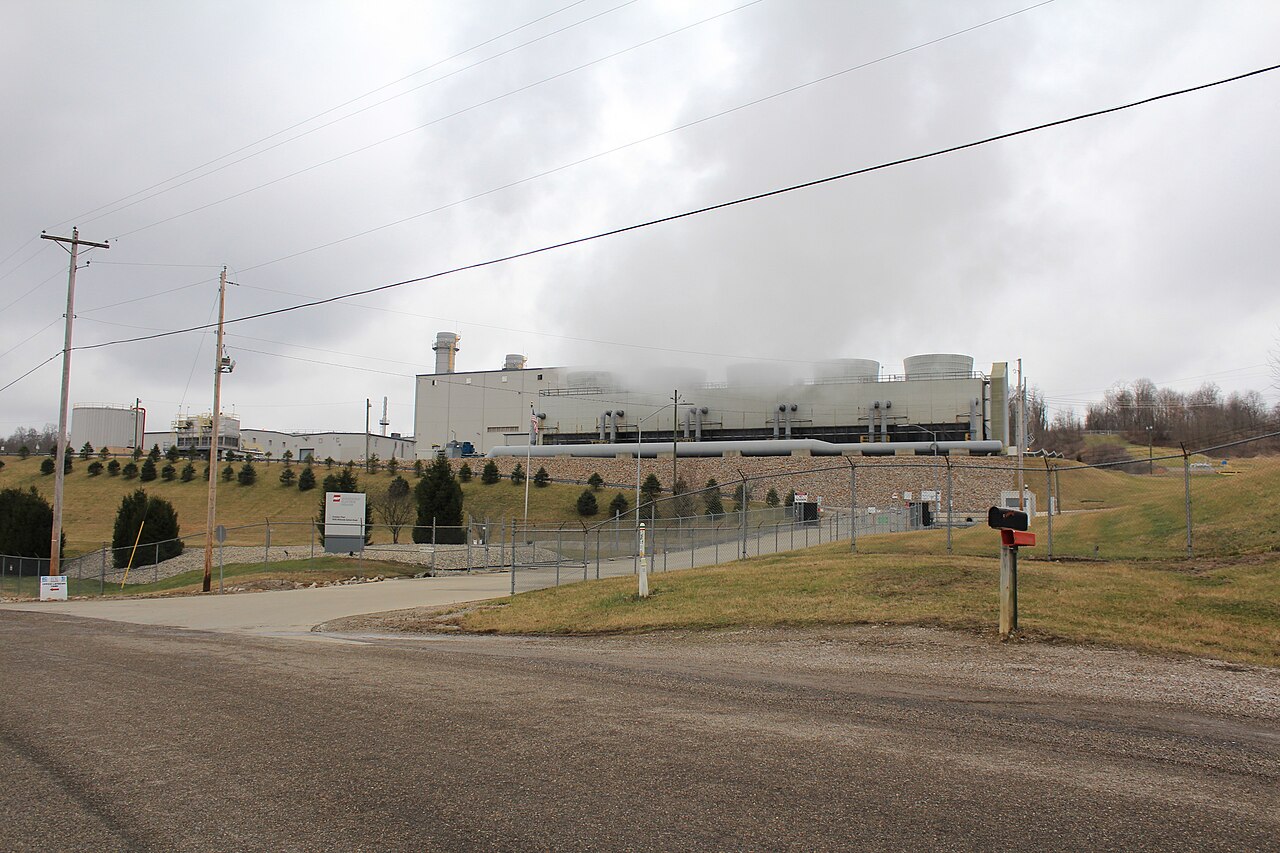
An over-the-counter company has taken options on land for a gas-powered data center campus in Cassia County, Idaho. The options are rights to buy. They are not a purchase, a permit or an approval.
TerraVolt Holdings, which trades on the OTCQB under the ticker GEDC, disclosed in a Form 8-K reporting events of Oct. 26, 2026 that it entered two option agreements with Wickel Land Company LLP. Together they cover about 1,077 acres in Cassia County, outside the town of Declo. According to the filing and the company's press release dated Oct. 30, 2026, the company intends to build a campus designed to support an initial 240 megawatts of dedicated on-site power generation, behind the meter and operating independently of the local electric grid.
Below is what the filings say, what other sources add, and what the record does not yet show.
What did TerraVolt actually sign?
The 8-K, under Item 1.01, describes two option agreements with the same seller, dated as of Oct. 23, 2026 and entered into on Oct. 26:
- A cash parcel of about 903.3 acres, at $30,000 per acre payable in cash, according to the filing.
- A "Stock Parcels" agreement covering about 174.1 acres, also at $30,000 per acre, but payable by delivery of a convertible secured promissory note, according to the filing. The note would carry a two-year term and convert into TerraVolt common stock at $5.00 per share, subject to the conditions the filing sets out. If it is not converted, it is repaid in cash and secured by a mortgage on those parcels.
The 8-K says TerraVolt deposited option fees totaling $150,000 with TitleOne Corporation as escrow agent. Fifty percent is nonrefundable and is released to the seller; the other fifty percent is held in escrow pending exercise, termination or expiration of the options. The agreements give TerraVolt the right to buy the land, and the filing says both options must be exercised together if the company elects to acquire the properties. The filing does not describe the land as acquired. It also says the actual acreage will be set by a land title survey.
The 8-K describes the site as zoned for Multiple-Use. It says the property sits along State Highway 81 near Interstate 84, long-haul fiber routes and the Williams Northwest Pipeline.
How would the campus be powered?
TerraVolt's plan relies on generating its own electricity on site rather than buying it from a utility. The company's press release, filed as Exhibit 99.1, describes "dedicated on-site power generation" and "islanded" power generation. It says the campus is designed to avoid utility interconnection queue delays and to insulate local ratepayers from grid strain or rate increases. Those are the company's own claims.
The fuel side came before the land. On May 12, Pipeline & Gas Journal reported that TerraVolt Infrastructure had signed a firm natural gas supply agreement for 55,000 MMBtu per day for a planned campus of 200 to 240 MW in southeast Idaho. The trade publication identified TerraVolt Infrastructure as a subsidiary of CalEthos Inc. and said the project was designed to provide on-site generation without drawing electricity from the local grid. The 8-K says the planned 240-MW capacity will be supported by the company's previously announced firm gas supply agreement of 55,000 MMBtu per day.
None of the sources lists the generation technology, such as turbines or reciprocating engines, the number of units or an emissions profile. The press release lists power plant design among the work the options allow the company to advance.
What about water?
Water is often the first question in arid parts of the West. The company's press release makes one specific commitment: TerraVolt says it intends to require cooling technologies with low water usage, such as closed-loop cooling, for any data center developed on the property, and to make that requirement a condition of each site sale. The release says that, following entitlements and civil development, TerraVolt plans to sell building sites to data center operators and provide them with power, fiber, water and wastewater services. It says the cooling approach is expected to limit ongoing campus water use primarily to domestic needs and fire protection. The release does not give a gallons-per-day figure, a water source or any water rights filing.
Who is the company?
The SEC filings name the registrant as TerraVolt Holdings, Inc., a Nevada corporation with its principal offices in Tustin, California. Pipeline & Gas Journal's May report named TerraVolt Infrastructure as a subsidiary of CalEthos Inc. The sources reviewed for this article do not explain the corporate relationship between those entities beyond what each states. Readers should treat the descriptions as the company's own.
In the press release, Joel Stone, identified as chairman and CEO of TerraVolt Holdings, says the options secure site control, allowing the team to advance land use plans, environmental due diligence, power plant, electrical distribution and water treatment system designs, and county and state permitting.
How independent is any of this?
Not very, so far. The site details, megawatt figures, gas supply terms and water commitment all come from TerraVolt's own filings and statements, or from trade press reporting on them. No independent source reviewed for this article confirms those claims.
The More Than Just Parks Data Center Tracker, which follows proposed campuses nationally, lists the Cassia County project as "Proposed," with 240 MW announced. It attributes the 200-to-240-MW figure to a Data Center Dynamics report, saying TerraVolt claims it for the initial phase. The tracker says its source gives no street address, and its map pin marks the center of Twin Falls rather than the site. It records nothing dated on the site beyond its listing, and no local hearing or vote.
For Cassia County residents and officials, the practical point is this: no application, hearing or decision appears in the public record cited here. The Multiple-Use zoning described in the 8-K is the company's characterization. The sources do not say whether a data center or a gas-fired power plant would be a permitted use under that zoning or would need further county approval.
What the filing does not say
- Any named data center tenant or buyer for the land.
- A construction schedule, total project cost or job estimate.
- Which state permits, such as air quality permits for on-site generation, the company expects to need, or when it would file for them.
- Whether TerraVolt has the financing to exercise the options and complete the purchase.
What Happens Next
The only dated step in the sources is in the 8-K: the options expire on Oct. 23, 2027, a date TerraVolt may extend by six months at its sole discretion by paying $75,000, and the option periods can be tolled during litigation or a governmental moratorium. No county hearing, vote, permit application or docket deadline is cited in the 8-K, the press release, the Pipeline & Gas Journal report or the More Than Just Parks tracker. The company's stated next steps, in its press release, are to advance land use plans, environmental due diligence, power plant and related designs, and county and state permitting under the site control the options provide. DataCenterFeed will report any Cassia County or Idaho state filing or hearing notice once one appears on the public record.
Sources
- TerraVolt Holdings Form 8-K (report date Oct. 26, 2026), Item 1.01
- TerraVolt press release, Exhibit 99.1 (Oct. 30, 2026)
- Pipeline & Gas Journal: TerraVolt Taps Northwest Pipeline for Idaho AI Data Center Project (May 12, 2026)
- More Than Just Parks Data Center Tracker: Cassia County Data Center Campus, Idaho
