
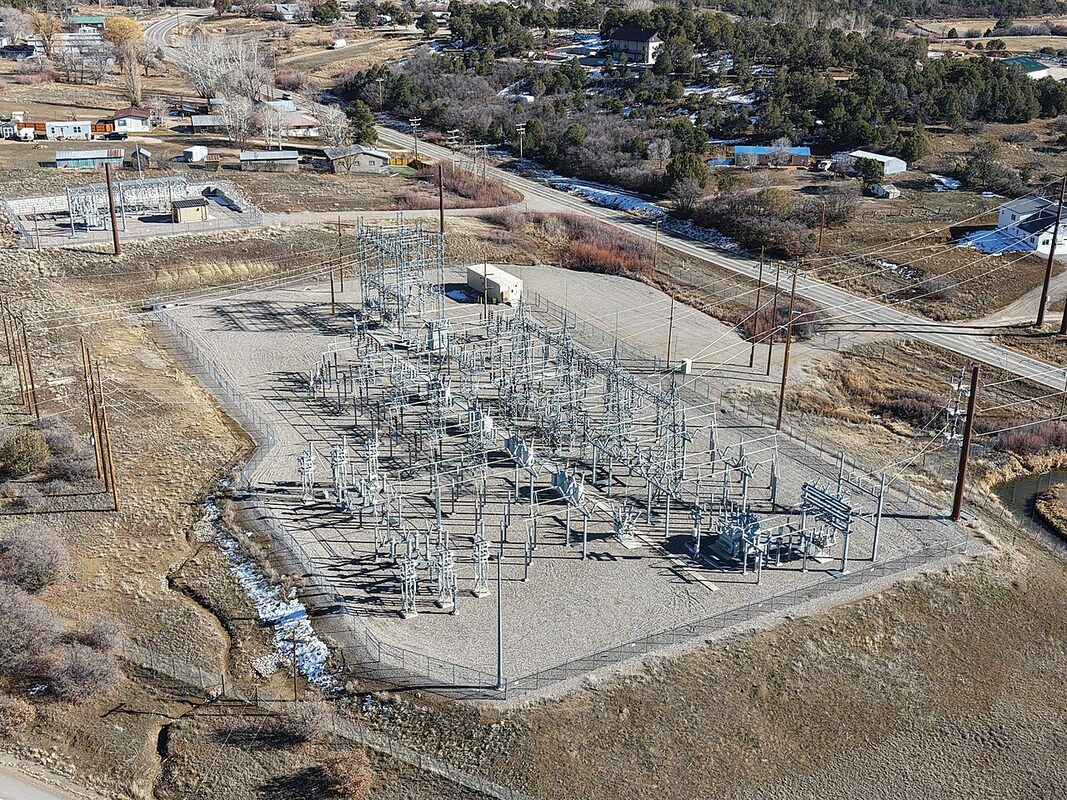
St. Louis developer TerraWatt has proposed turning the shuttered Alton Steel mill in Alton, Illinois, into a data center campus. The City of Alton says the process has barely started. On Oct. 21, 2026, the day TerraWatt announced the project, the city posted a statement on its website: "No formal application for a permit, or zoning change has been made."
The city said both Alton Steel Inc. and TerraWatt had contacted it about a possible purchase and redevelopment of the former mill property as a data center campus. It also laid out the steps such a project would have to clear before anything could be built. The first is a rezoning that goes through the Plan Commission and then the City Council.
What TerraWatt Has Proposed
According to TerraWatt's press release, as reported by St. Louis Public Radio, the company wants to redevelop the former Alton Steel Mill site at 5 Cut St. as the Riverbend Technology Center. St. Louis Public Radio reported the property at 381 acres and described the proposal as a 200-megawatt data center to be built in several phases. The first phase would be demolition of 1.26 million square feet of mill buildings.
TerraWatt says it has a "contingent agreement" to buy the property from Alton Steel Inc., St. Louis Public Radio reported. The sale would close in 2027 if the city agrees to rezone the land. It also depends on a study by Ameren Illinois and on TerraWatt's due diligence.
TerraWatt also gave St. Louis Public Radio several headline numbers. The company puts the project at $3 billion. It says the campus would use about 400,000 gallons of water a year and generate more than $17 million in tax revenue annually, St. Louis Public Radio reported. The outlet separately reported that TerraWatt estimates about $17.2 million in property taxes in the project's first ten years of operation, with the largest share going to Alton School District 11. TerraWatt says it is not seeking local tax incentives or tax increment financing, even though the site sits inside Alton's Riverfront TIF district.
How Large Could It Get?
Accounts of the project's size differ. St. Louis Public Radio's account of the press release describes a 200-MW data center built in phases. Trade publication Baxtel, citing other outlets, reported on Oct. 23 that TerraWatt would build in 200-MW blocks up to a total of 1 gigawatt. Neither the city's statement nor St. Louis Public Radio's report states the 1-GW figure. For now, 200 MW is best read as the first block, and the larger ceiling comes from Baxtel's account.
Baxtel also reported that Ameren Illinois would supply power and that no tenant has been disclosed. It quoted an adviser to TerraWatt as saying Ameren Illinois should be able to deliver about 200 MW in the near term because the old mill drew roughly 160 MW.
Baxtel also passed along per-block economics that it attributed to St. Louis Magazine. DataCenterFeed could not independently review that report. By that account, each 200-MW block would cost about $2.64 billion, involve nearly 5,000 construction jobs and 50 permanent jobs, and produce about $17.2 million a year in new property tax per block. Of that, $9.9 million would go to Alton School District 11 and $4.2 million to the city. These per-block figures do not line up with the $3 billion total, the roughly $17 million in annual tax revenue, or the $17.2 million over ten years in St. Louis Public Radio's account of the press release, and the sources do not explain the difference. Readers should treat them as secondhand until TerraWatt files documents with the city. Baxtel also reported that the Riverfront TIF district expires in December 2029.
What the City Has Committed To
The city's statement describes a review process, not a position on the project. Alton says it will seek a third-party consultant with civil engineering, planning and environmental expertise, and it will work with the City Council to hire one.
St. Louis Public Radio reported that the city's release quoted Mayor David Goins.
Under the process the city describes, the site must be rezoned before a data center can go forward. The developer must submit an application with a fully detailed site plan. The application goes first to the Plan Commission and then to the City Council, and each body votes at a regularly scheduled meeting.
The city also published its filing calendar. Applications for amendments and special use permits are due on the first of the month before the meeting where they will be heard. The Plan Commission meets on the second Tuesday of each month at 6 p.m. in Council Chambers. Because no application has been filed, the city has not scheduled any hearing on the proposal.
The St. Louis Backdrop
This is not TerraWatt's first data center proposal in the region. St. Louis Public Radio reported that the company is separately suing the City of St. Louis over its proposed 120-MW Midtown data center project. St. Louis Public Radio described that lawsuit as current when it published on Oct. 21.
Key Points for Residents and Officials
- Filing status: According to the city, no permit or zoning application has been filed as of its Oct. 21 statement.
- Required approvals: A rezoning with a detailed site plan, reviewed by the Plan Commission and then the City Council.
- Purchase status: TerraWatt reports a contingent agreement, with closing expected in 2027 if the rezoning, the Ameren Illinois study and due diligence all go its way (per St. Louis Public Radio).
- Size: St. Louis Public Radio reports 200 MW. Baxtel reports a build-out of up to 1 GW in 200-MW blocks.
- Incentives: TerraWatt says it is not seeking local tax incentives or TIF (per St. Louis Public Radio).
What Happens Next
The next scheduled public event is TerraWatt's open house on Tuesday, Oct. 27, 2026, from 6:00 to 7:30 p.m. at the Wedge Building, 620 E. Broadway, Alton, according to the city's statement. The city lists riverbendalton.com as the project website.
On the city side, Alton says it will work with the City Council to hire a third-party consultant. Formal review will begin only when TerraWatt submits a rezoning application with a detailed site plan. Under the city's calendar, that application is due on the first of the month before the Plan Commission meeting where it will be heard, and the Plan Commission meets on the second Tuesday of each month. After the Plan Commission votes, the City Council takes up the request at one of its regularly scheduled meetings.
