
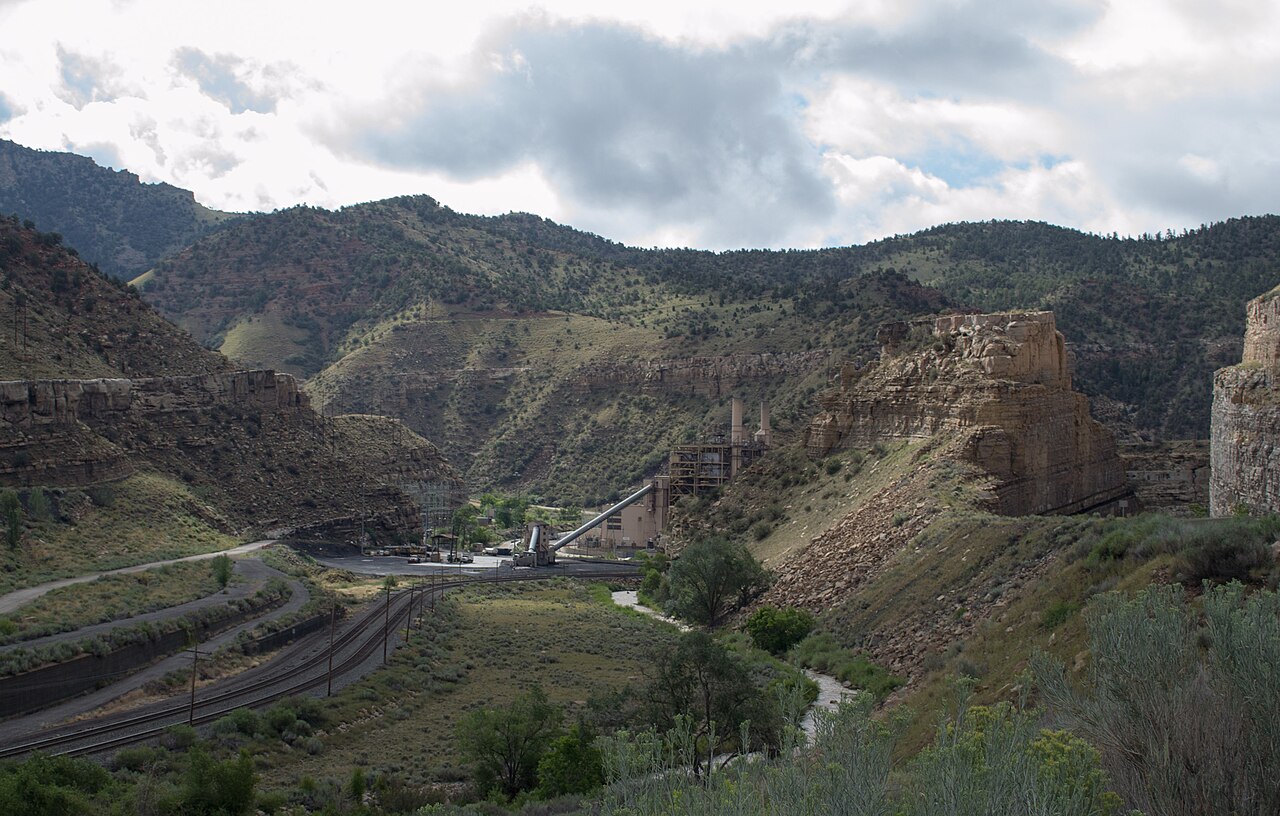
The Carbon County Planning Commission in eastern Utah has approved a conditional use permit for the Raceway Energy Campus, an industrial development by Valar Atomics on state trust land that would include advanced nuclear energy, nuclear fuel, manufacturing and data center facilities. The vote came at a special meeting on Thursday, Nov. 12, 2026, according to the Salt Lake Tribune.
The permit covers one piece of a much larger plan. Valar has proposed a project called Project Beehive: hundreds of small reactors, co-located data centers and a fuel production facility on federal land around the trust land parcel. The Tribune reports that the county permit does not mean the project will break ground immediately, and that Valar still needs a county building permit, state approvals and a construction permit from the U.S. Nuclear Regulatory Commission.
What the Commission Approved
The special meeting was posted on the Utah Public Notice Website for 6:30 p.m. on Nov. 12 in the Commission Chambers of the Carbon County Administration Building, 751 East 100 North, Price. Item 4 on the agenda was review and consideration for possible approval of a conditional use permit application for the Raceway Energy Campus. The notice calls it a Large-Scale Industrial Project comprising advanced nuclear energy, nuclear fuel, manufacturing and data center facilities on parcel 2A-1292-016S, for SITLA and Valar Atomics Inc.
The notice is an agenda, not minutes, so it does not record an outcome. The Tribune reported that the commission approved the application after nearly two hours of discussion with the company, and that Commissioner Lisa Simmons cast the only "nay" vote. The Tribune did not give the full tally in the text reviewed. It describes the project as a 640-acre nuclear, natural gas and data center campus on land owned by the Utah Trust Lands Administration.
The Tribune's mention of natural gas does not appear on the official agenda, which lists nuclear energy, nuclear fuel, manufacturing and data center facilities. According to the Tribune, Valar plans to power the data centers first with a natural gas plant and eventually to build 40 to 120 nuclear reactors on the site. The Tribune also reports that the company says the campus will generate and use around 3 gigawatts of electricity. The paper notes that Utah as a whole consumes about 4 gigawatts.
The Tribune lists several conditions attached to the permit: Valar must submit an emergency response plan to the county building department in coordination with the sheriff's office and fire marshal, and the permit also calls for workforce housing, community engagement, and management plans for noise, water and waste. The Tribune says Valar's application states that low-level radioactive waste would be stored on site "only until shipped to a licensed off-site disposal facility," but that the application lacks details on where it would be stored temporarily and long-term. Valar's Cory Gardner said the company plans to use "zero local water," first by trucking water in and otherwise by acquiring private industrial water rights and non-culinary municipal water shares, according to the Tribune.
No Public Comment at the Meeting
The Tribune's headline says residents "never got a chance to weigh in." The paper reports that the commission did not take public comment on the application at the Nov. 12 meeting, and that Carbon County Attorney Christian Bryner said at the start of the meeting that the commission was not required to hold a public hearing to approve the permit. The agenda item, as published on the state notice site, is a review and possible approval item and is not labeled as a public hearing. The Tribune reports that nearly 200 people attended and that the room responded with a mixture of boos and cheers.
Local opposition to data center projects in the region is already on the record. High Country News reported on pushback in Utah's coal country against data center proposals. The outlet also reported that Altigen Energy plans a separate data center complex, "Jurassic Spark," east of Wellington on 1,200 acres, with a 250-megawatt gas plant initially that could eventually produce 3 gigawatts, according to a county official cited by HCN.
Roads and Access
Access to the site came up at the meeting. According to the Tribune, the company will initially use East Coal Creek Road to reach the state trust land, and Planning Commissioner Kurt McFarlane said the road has "probably two inches thick of asphalt" and "just won't hold up because of the trucks." Valar's head of commercial development, Cory Gardner, said the company is "committed and willing to make the upgrades to that road." Gardner said the long-term plan is not to use that road, and that the company plans to eventually build a new road on Bureau of Land Management land off Airport Road. The sources do not give a cost, design or schedule for either road.
The Land Deal Behind the Permit
The parcel is state trust land managed by the Utah Trust Lands Administration. High Country News reported that the agency agreed to lease a square mile of state land to Valar for up to 100 years, and that revenue from the project benefits Utah schools. Agency staff told the trust lands board the site would bring in $35 million in lease rents over 50 years, according to HCN. All three Carbon County commissioners voiced support for the project at the September trust lands board meeting, the outlet reported.
The sources give different acreages. ANS Nuclear Newswire, citing the Tribune's first report on Sept. 24, said Valar applied to lease 480 acres of state land near Price and Wellington, surrounded by BLM land. The Tribune's coverage of the permit uses 640 acres. HCN's "square mile" matches the 640-acre figure. The sources reviewed do not explain the difference. It could reflect a change in the lease footprint between the application and the permit, but that is not confirmed.
Project Beehive: The Larger Concept
The Raceway campus sits next to a much larger proposal. According to ANS Nuclear Newswire, which cited NPR's reporting, Project Beehive would cover more than 9,000 acres of BLM land and include 456 reactors, co-located data centers and a fuel production facility. High Country News also reported the 456 reactors and described them as small modular reactors on BLM land in Carbon County. The Tribune describes Beehive as an additional project Valar has proposed on 9,000 acres of adjacent federal land.
ANS reported that the BLM's Utah office told NPR it was "currently reviewing the application for completeness" and that the public would have "meaningful opportunities to provide input." ANS also reported that Valar had not publicly engaged in preapplication activities with the Nuclear Regulatory Commission and that its regulatory pathway was unclear, and that NPR reported Valar aims to begin nonnuclear construction by the end of 2026 and have first reactors online in 2028. Those details are as of ANS's Oct. 5 article. Readers should treat the 456-reactor figure as the company's stated concept, not an approved or permitted plan.
Valar's plans in the region also reach past Carbon County. High Country News reported that the company plans a 30-megawatt nuclear-powered AI data center in neighboring Emery County with Nvidia. The sources reviewed give no building square footage, job count or capital cost for the Raceway Energy Campus.
Why It Matters
For utilities, investors and local officials following the AI infrastructure buildout, the Carbon County vote is a notable county land-use approval for a site that combines nuclear generation, nuclear fuel work and data centers, with a gas plant planned as the first power source. It also shows how state trust land can serve as a starting parcel for a project whose larger footprint is proposed on surrounding federal land.
For residents, the open questions are procedural ones that the sources do not yet answer: whether any later county step will include a public hearing, and how road upgrades on East Coal Creek Road will be handled before any new access road off Airport Road is built. The Tribune reports that a traffic plan and a building permit still need county approval.
What Happens Next
None of the sources reviewed, including the Tribune report, the Utah Public Notice Website listing, High Country News and ANS Nuclear Newswire, give a date for any further Carbon County action on the Raceway Energy Campus, so DataCenterFeed is not reporting a next scheduled step. Future Carbon County meetings will be posted on the Utah Public Notice Website, where the Nov. 12 special meeting notice appeared.
Sources
- Utah Public Notice Website: Carbon County Planning Commission Special Meeting notice, Nov. 12, 2026
- Salt Lake Tribune: A Utah county greenlit a massive data center and nuclear energy project. Residents never got a chance to weigh in.
- High Country News: Utah's coal country pushes back against data centers
- ANS Nuclear Newswire: Details emerge on Valar's Utah plans
