
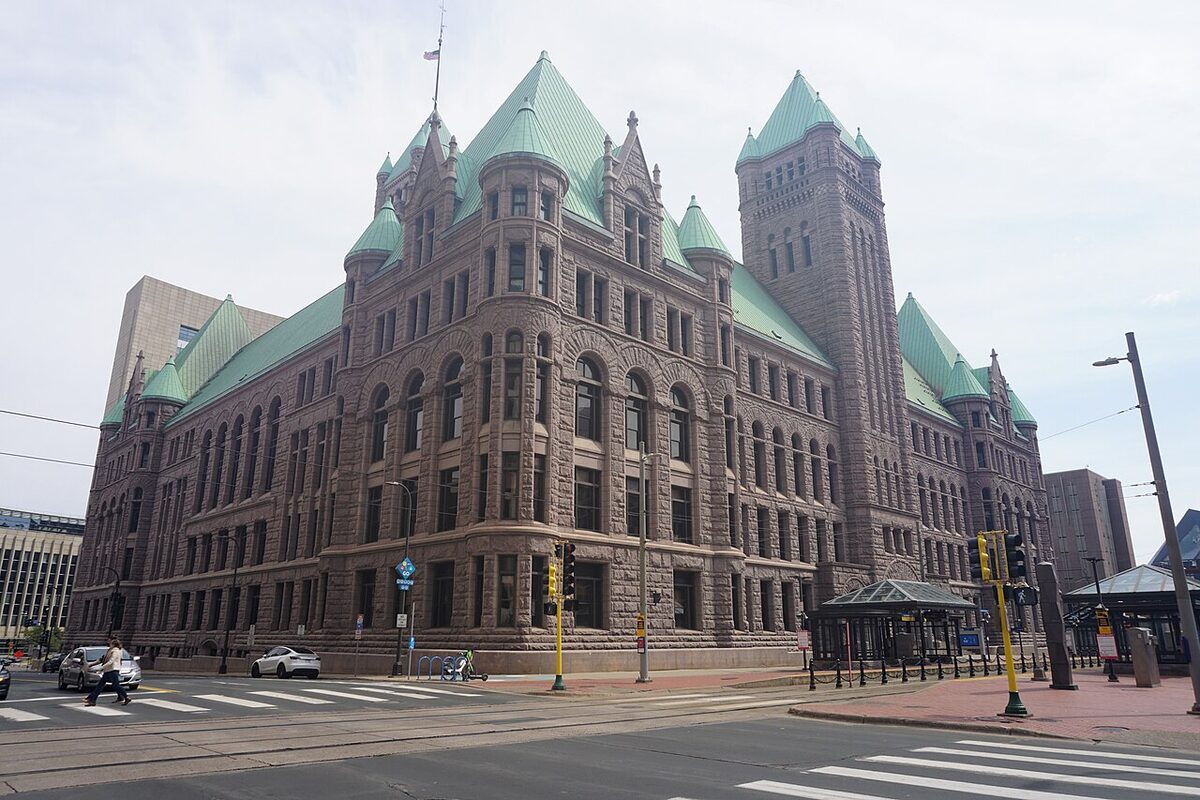
The Minneapolis City Council took two votes on data centers on Nov. 12. A full ban on new facilities failed, 6 yes to 7 no. The council then passed a compromise ordinance 7-6. It creates two downtown districts, requires data centers to operate in existing space, and gives council members the opportunity to allow or deny specific projects, CBS Minnesota (WCCO) reported.
The ordinance now goes to Mayor Jacob Frey, who can approve or veto it. The temporary moratorium on new data center proposals expires Nov. 21. That gives the city a short window to have permanent rules in place before the pause ends.
What the Ordinance Does
Post-vote reporting from CBS Minnesota and KSTP describes the main provisions the same way:
- Location. A data center must be in one of two downtown overlay districts, KSTP reported.
- Existing buildings only. A facility must operate in existing space. KSTP described this as existing office space, and CBS said the data center must operate in an existing space.
- Not the primary use. A data center cannot be a building's primary use, according to both outlets.
- Size tied to energy source. CBS and KSTP both report a cap of 150,000 square feet for a facility using renewable energy and 50,000 square feet for one using non-renewable energy.
- Project-by-project council review. CBS reported that the compromise gives the council the option to allow or deny specific data centers.
Pre-vote accounts described the size limit differently. MPR News said on the morning of the vote that the compromise would cap the server space of new centers at 150,000 square feet, restrict them to existing downtown buildings, require mixed use of buildings with data centers, and require any center with server space over 50,000 square feet to buy into a renewable energy program. That differs from the post-vote CBS and KSTP descriptions of a 150,000 and 50,000 square-foot split by energy source. DataCenterFeed has not reviewed the adopted ordinance text. Readers who need the exact district boundaries and square-footage thresholds should check them against the final ordinance as filed by the city.
What the City Set Out to Regulate
The city's zoning amendment page was last updated Oct. 16 and describes the project before the final votes. According to that page, the city is updating its zoning rules to:
- define what a data center is;
- limit their size;
- decide where they are allowed;
- require data centers to report planned energy and water use; and
- reduce noise.
The page also sets out limits on the city's authority. It says cities in Minnesota cannot make their own rules for building components or systems because the state building code controls those. It also says servers that serve only the same property usually are not counted as a data center, so an office building's own server room would generally fall outside the definition. The amendment may change Chapters 535, 540, 545, 550 and 565 of the city's zoning code, the page says.
The city listed four meetings for the process: a Planning Commission Committee of the Whole session on June 16, a Planning Commission public hearing on Oct. 13, the Business, Housing & Zoning Committee on Nov. 5, and the full council on Nov. 12. The final vote took place on that last date.
How the Council Voted
CBS Minnesota reported that the seven votes for the compromise came from Council Members Payne, Wonsley, Stevenson, Chavez, Chughtai, Whiting and Chowdhury. KSTP listed the six no votes: Osman (Ward 6), Rainville (Ward 3), Vetaw (Ward 4), Warren (Ward 5), Shaffer (Ward 7) and Palmisano (Ward 13).
The full-ban proposal came up first and failed with six yes votes and seven no votes. CBS reported that Council Member Whiting voted against the ban but cast a vote in favor of the compromise policy.
Council Member Elizabeth Shaffer was one of the six no votes on the final ordinance. MPR News identified her as one of the lead writers of the regulations. Before the vote she told MPR, "Look around our city. We do not see cranes. We are not building, and our construction trades need work."
The Moratorium and Public Comment
The city page says the council approved a temporary ordinance earlier this year that pauses new data center proposals in most of the city. CBS described it as a five-month moratorium put in place in June that expires Nov. 21, while MPR News called it a six-month moratorium. According to MPR News, the moratorium exempted downtown projects under 350,000 square feet and went into effect without Mayor Frey's signature.
The city received about 1,600 written comments, according to MPR News; CBS said approximately 1,600 residents weighed in. MPR's analysis found that the vast majority opposed data centers and that almost half called for an outright ban. Organized labor pushed the other way. MPR reported that the Minnesota AFL-CIO and the Minneapolis Building and Construction Trades Council wrote in favor of looser rules, including allowing data centers outside of downtown and dropping or raising the size cap.
What It Means for Developers and Operators
Based on the post-vote coverage, the ordinance is narrow in where and how a data center can be built. Hyperscale and large colocation campuses are typically built new on large sites, but the ordinance as reported requires existing space. It allows only two downtown districts and caps facilities at 150,000 square feet with renewable energy and 50,000 square feet with non-renewable energy, as reported by CBS and KSTP. It also bars a data center from being a building's primary use. Taken together, these provisions suggest smaller facilities placed inside buildings that mainly serve other uses, though the adopted text would settle the details.
Project-by-project council approval adds a political step that by-right zoning would not have. According to CBS, the compromise gives the council the opportunity to allow or deny development of specific data centers.
The energy and water reporting requirement listed on the city page would give the city planned-consumption figures for each facility. The page does not specify reporting thresholds or a format. Those details would be in the adopted text.
What Happens Next
The ordinance goes to Mayor Jacob Frey, who can approve or veto it, according to KSTP; CBS reported the measure will head to his desk. MPR News reported that a minimum of seven council votes is needed to pass legislation and a minimum of nine to override a mayoral veto. The ordinance passed with seven.
Separately, the existing moratorium expires Nov. 21, as CBS and MPR News reported. MPR News reported that if no new rules pass before then, data centers would fall back under the city's existing zoning code, which allows them with a permit in 10 of the city's 15 zoning districts. The sources do not say when the mayor will act.
Sources
- City of Minneapolis: Data Centers zoning amendment page
- CBS Minnesota (WCCO): Minneapolis City Council approves regulations for data centers, but fails to pass complete ban
- KSTP: Minneapolis City Council narrowly approves data center ordinance that adds regulations
- MPR News: Minneapolis City Council to vote on data center regulations
