
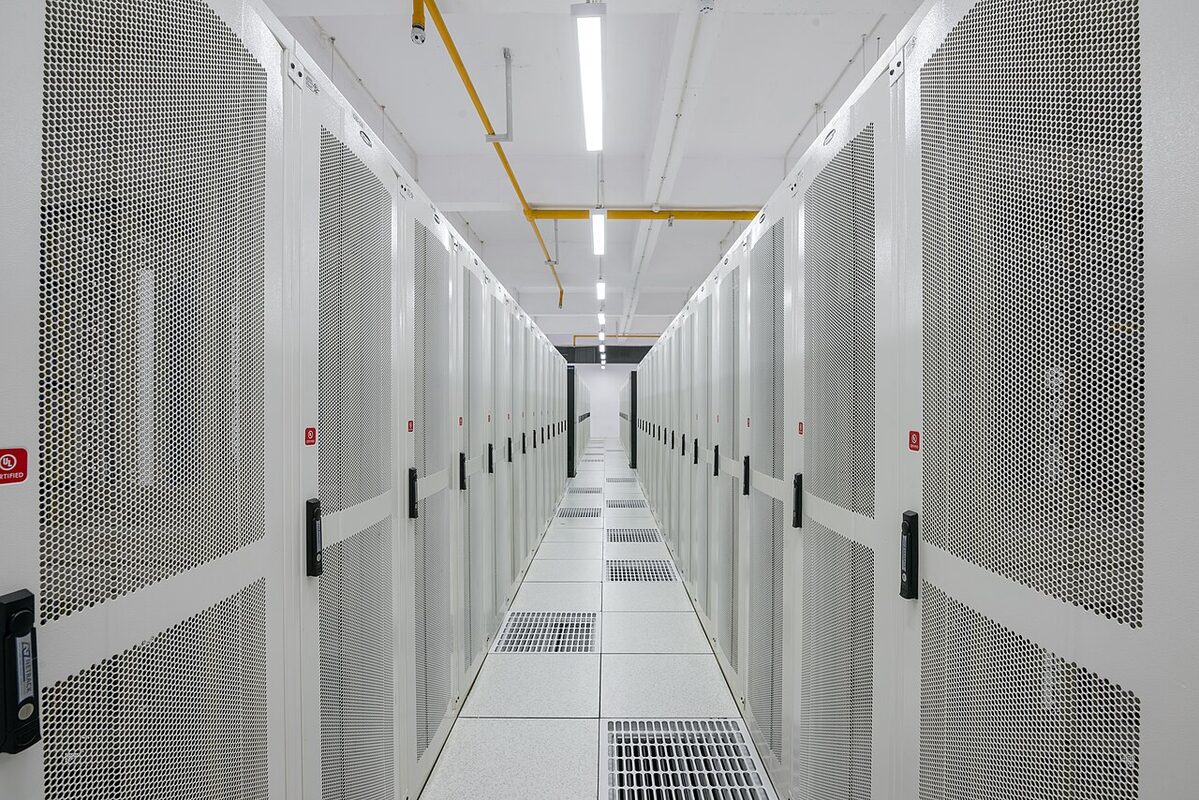
Crusoe on Oct. 21 introduced Crusoe Spark Liquid, which the company calls the sixth generation of its factory-built modular AI data center. According to Crusoe's announcement, the new unit uses closed-loop direct liquid cooling, supports up to 3.5 megawatts of compute per unit, and is designed for NVIDIA's GB300 NVL72 and Vera Rubin NVL72 rack-scale systems.
Every performance and capacity figure for Spark Liquid in this article comes from Crusoe's own release. The version carried on newswire syndication matches it. DataCenterFeed could not find independent reporting on the new product that it was able to read. The figures below are Crusoe's claims and have not been independently verified.
What Crusoe says it built
Spark is Crusoe's line of prefabricated data center modules. They are built in a factory and shipped to a site, not constructed there. According to the company, the liquid-cooled version makes four main changes:
- Power per unit: Crusoe says the closed-loop direct liquid cooling (DLC) system supports up to 3.5 MW of compute in each unit.
- Density: The company says this is a 5x increase in compute density over earlier Spark generations.
- Target hardware: Crusoe says Spark Liquid was engineered for NVIDIA GB300 NVL72 and Vera Rubin NVL72 racks.
- Water: Crusoe describes the cooling loop as closed-loop and non-evaporative and says it consumes no water.
"Spark Liquid is Crusoe's sixth generation of modular data centers," said Cully Cavness, Crusoe's co-founder, president and chief strategy officer, in the release.
Crusoe also says Spark units can be deployed in months rather than years. The release does not give a specific timeline for any Spark Liquid site. It says the existing Spark product is already in production use by Ollama.
Why the cooling design matters
The water claim is the one likely to draw attention from local officials and residents. Crusoe's release describes the design as closed-loop and non-evaporative, delivering liquid cooling "without consuming or evaporating water," and says this lets customers scale high-density infrastructure in water-stressed regions and local communities. That is Crusoe's own framing.
The release does not say how the heat is ultimately rejected from the closed loop. It also does not say how much electricity that equipment uses or how it performs in hot climates. These questions matter for local permitting. Buyers and regulators will probably want answers before treating "no water" as a full description of a unit's environmental footprint.
On density, the release says Spark Liquid provides a 5x increase in compute density over previous generations and supports up to 3.5 MW per modular unit. The release does not break down how many racks fit in a unit or what each rack draws.
Where the units are made
Crusoe says Spark Liquid will be manufactured in Colorado and will join existing Spark production at its Brighton factory in 2027.
The Next Web covered Crusoe's financing in September. That reporting predates Spark Liquid and does not mention it, but it gives context for the manufacturing plans. The outlet reported that Crusoe makes Spark modules in its own factories and ships them to sites with available power. It also reported that Crusoe chief executive Chase Lochmiller said a plant outside Denver will eventually make up to a gigawatt of Spark capacity a year. In the same report, The Next Web said units already run in Reno, Nevada, on old electric car batteries and solar panels.
The company behind it
According to The Next Web, Crusoe announced the initial close of a $3.9 billion Series F on Sept. 17 at a post-money valuation of $30.9 billion. The outlet also reported that Crusoe claims more than 6 GW of gross contracted capacity, of which 1 GW is operational, and reported total contracted value above $140 billion.
Those numbers cover all of Crusoe's business, including large campuses. They are not specific to Spark. Crusoe's release says Spark Liquid will provide capacity for Crusoe Cloud, the company's own GPU cloud service. Crusoe has not said how many Spark Liquid units it plans to build or deploy, or where.
What is still unknown
Several points that matter to utilities, communities and buyers are not covered in the material DataCenterFeed reviewed:
- Sites: The release names no deployment location for Spark Liquid.
- Grid connection: Crusoe does not say whether the units are meant for grid-connected sites, behind-the-meter generation, or both. This affects interconnection and local utility planning.
- Facility power: The 3.5 MW figure is described as compute per unit. The release does not give total facility load including cooling and power conversion.
- Independent validation: No third-party testing of the density or water figures was available.
What Happens Next
The next milestone Crusoe has put on the record is manufacturing. The company says Spark Liquid production will join existing Spark production at its Brighton factory in 2027. The release gives no specific month, no first-customer delivery date, and no named deployment site. DataCenterFeed will report site-level details, including any local permitting or utility filings, as they appear in public records.
