
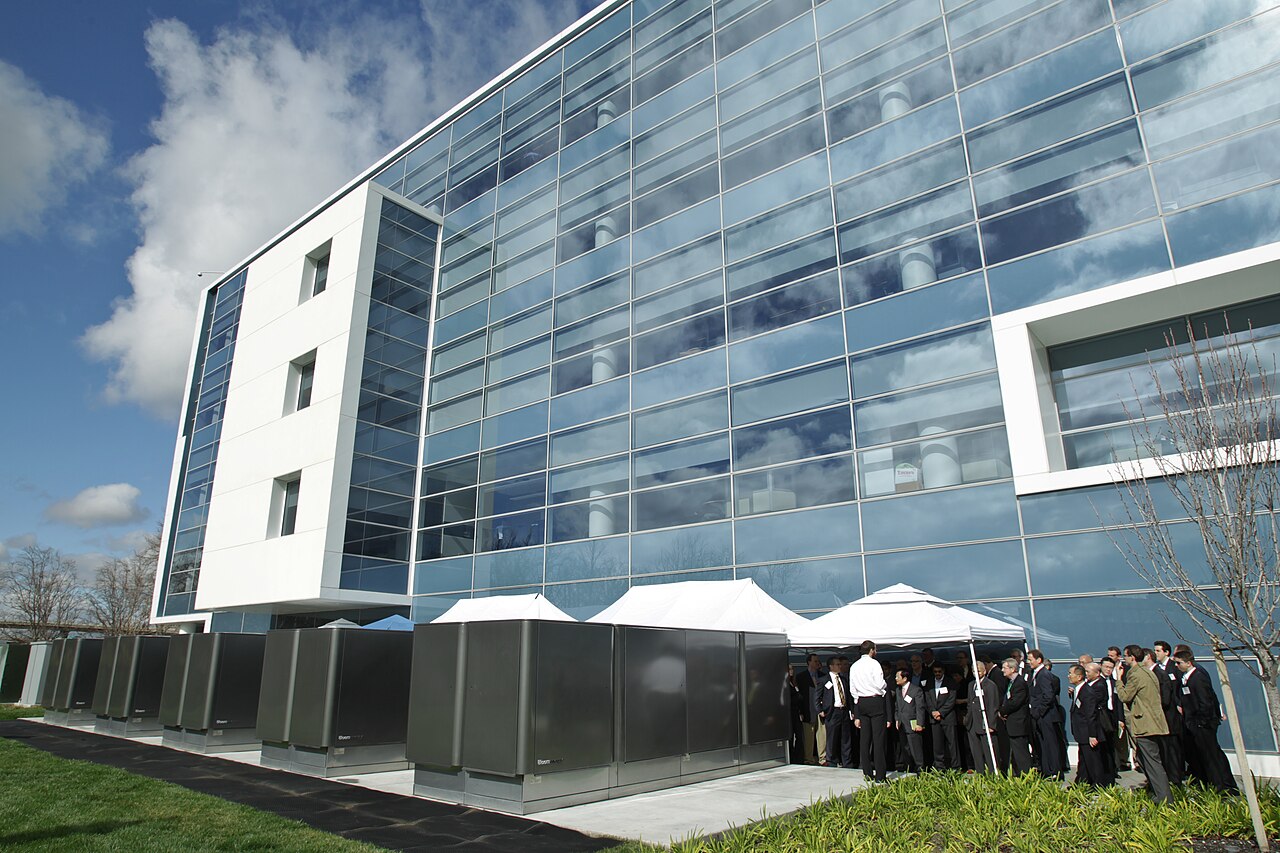
NTT DATA's data center arm has agreed to deploy Bloom Energy fuel cells to supply 900 megawatts of onsite power across several of its data center projects worldwide. The two companies announced the deal on Nov. 5 and say the first systems will ship in 2027.
NTT Global Data Centers will deploy Bloom's solid oxide fuel cells (SOFCs) as primary power, according to Energy Tech. That means the fuel cells are meant to carry the main load, not serve as backup behind a grid connection. Energy Tech describes it as Bloom's largest international project to date. DatacenterDynamics calls it Bloom's largest deal with a single data center developer.
The announcement leaves out several details that matter to utilities, local officials and nearby residents. The readable coverage names no project sites, gives no dollar value and does not say how the 900 MW will be split among facilities. Bloom's own press release page could not be read for this article, so the details here come from the trade press coverage listed below.
What the Agreement Covers
Bloom will supply SOFC systems to be installed on site at NTT's data centers, DCD reported. According to FourWeekMBA, which quoted the Nov. 5 release, the agreement covers 900 MW of onsite power across multiple data center projects. Initial shipments start in 2027.
The companies present 900 MW as a starting point. The release, as quoted by FourWeekMBA, says the relationship is "designed to expand across NTT DATA's global data center portfolio and reach gigawatt scale." Energy Tech also reported that the relationship could reach gigawatt scale across NTT DATA's portfolio. Neither outlet reported a schedule or a firm commitment for any capacity beyond the initial 900 MW.
The deal also gives a sense of NTT's footprint. DCD reports, citing NTT Data's website, that NTT Data Group operates more than 150 data centers in more than 20 countries and regions. FourWeekMBA notes that the release describes NTT DATA as a "$30+ billion business and technology services leader."
Why Onsite Generation
Both executives framed the deal around speed to power, meaning how quickly a site can get the electricity it needs. Energy Tech reported that Doug Adams, CEO of NTT Global Data Centers, called power availability one of the defining factors in delivering capacity. DCD quoted Adams as saying Bloom's onsite power gives NTT a way to bring capacity online alongside construction. Aman Joshi, Bloom's executive vice president and chief commercial officer, said the systems are intended to support power needs as AI computing expands into edge and inference use cases, according to Energy Tech. Inference is the work of running AI models that are already trained, as opposed to training them.
Energy Tech frames the deal as a response to growing AI infrastructure demand and a grid that is becoming harder to rely on for electricity. Generation installed at the site is how NTT says it can bring capacity online alongside construction. The coverage reviewed here does not say whether NTT plans to connect any of these sites to the grid later.
The Fuel Question
Fuel cells make electricity through an electrochemical reaction instead of burning fuel. Energy Tech reports that Bloom's systems generate electricity without combustion and are designed for low local air emissions, minimal water consumption and limited noise. It also says their modular configuration allows capacity to be deployed in phases alongside data center construction.
Those claims are the companies' own descriptions, as relayed by the trade press. The fuel still matters. DCD notes that while Bloom's generators can run on hydrogen, at present the vast majority rely on natural gas, so sites using them would depend on gas supply. Low local air emissions are not the same as zero greenhouse gas emissions. The coverage reviewed here does not say what fuel NTT's systems will use or how much carbon they will emit.
Scale in Context
FourWeekMBA compared the order with Bloom's production capacity. Citing a Rystad Energy estimate of roughly 1.8 GW of annual fuel-cell manufacturing capacity, as reported by Reuters, it said 900 MW is about half of that figure. That comparison is FourWeekMBA's own arithmetic. Neither company has issued it as an official figure, and the coverage does not say how shipments would be spread across years.
DCD also noted that in October it was reported that NTT Data was in talks to develop a $6.3 billion data center in Western Japan for Anthropic. Nothing in the coverage reviewed here links that report to the Bloom agreement.
DCD placed the deal among Bloom's other data center agreements, including an expanded agreement with Oracle to supply up to 2.8 GW. It added that deployments at Oracle's Jupiter data center in Doña Ana County, New Mexico, have faced roadblocks due to opposition to the extension of a gas pipeline expected to feed that facility's fuel cells. DCD did not connect that dispute to the NTT sites, which have not been named.
What We Don't Know
- Locations. None of the sources names a country, campus or project that will receive the fuel cells.
- Capacity by site. The 900 MW figure is a total across multiple projects. No breakdown by site has been reported.
- Price. No dollar value for the agreement appears in the coverage reviewed here.
- Fuel and permits. The coverage reviewed here does not say what fuel any NTT site will use or what permits or approvals any specific site will need.
What Happens Next
The one dated milestone on the record is that initial shipments of Bloom fuel cell systems for NTT projects are expected to begin in 2027, as reported by Energy Tech, DCD and FourWeekMBA. Neither company has named the first sites to receive equipment or given a date for later phases toward the stated goal of reaching gigawatt scale.
