
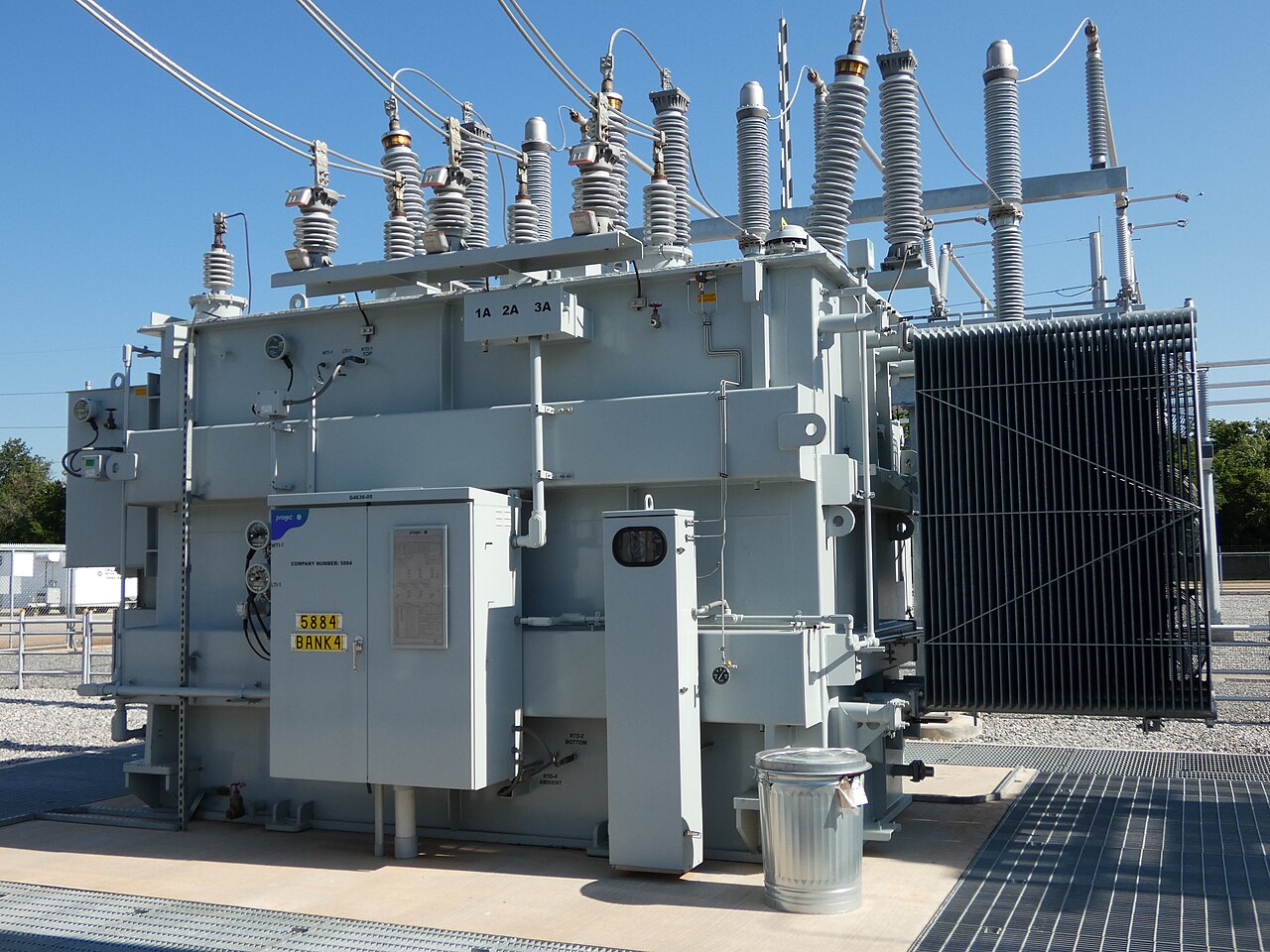
Vantage, a global provider of digital infrastructure, has secured more than 1 gigawatt of manufacturing capacity for Heron Power Electronics' solid-state transformer. The companies announced the deal on Oct. 21, 2026. It is a notable sign that 800-volt direct-current (800 VDC) power distribution, which has mostly been discussed as a reference architecture for AI racks, is moving toward procurement.
According to the joint announcement, issued from Denver and Scotts Valley, Calif., the capacity covers Heron Link, the company's solid-state transformer (SST). Vantage plans to deploy the units in its hyperscale data center campuses. The release gives no price, delivery schedule or campus locations.
The commitment is large, but the release describes a manufacturing capacity agreement, not a shipment schedule. Heron's first commercial factory, according to Latitude Media, is still being built.
What the agreement covers
The release says Vantage "has secured over 1GW of manufacturing capacity of Heron Link, Heron's solid-state transformer (SST), to deploy in its hyperscale data center campuses." That figure is manufacturing capacity. It is not a count of installed or delivered equipment. Neither company disclosed which campuses will get the equipment, when, or under what commercial terms.
Curtis Aubry, Vantage's vice president of global product strategy, framed the deal around deployment speed. In the release he said that by simplifying the electrical architecture and integrating power conversion, energy storage and compute more effectively, "we can help reduce deployment complexity, improve efficiency and accelerate our customers' speed to capacity."
Drew Baglino, Heron's founder and CEO, described it as a step from paper to practice: "we will move 800 VDC from a reference architecture concept to a repeatable, deployed platform."
What a solid-state transformer does differently
The release describes traditional data center electrical systems as relying on multiple stages of conversion, energy storage and distribution between the grid and the rack. As rack densities increase, it says, those systems can require more equipment, conductors, floor space, installation labor and commissioning time.
Heron Link takes a different approach. Per the release, it converts medium-voltage grid power directly to 800 VDC with integrated energy storage, which reduces the number of conversion stages. Heron says Heron Link targets efficiency above 98.5% from medium voltage to 800 VDC. The release lists five claimed benefits of the architecture:
- faster time to capacity, because fewer equipment dependencies and installation steps shorten the electrical critical path
- greater energy efficiency, because fewer conversion stages reduce losses between the grid and the rack
- support for higher-density computing, including megawatt-class rack densities
- less equipment, floor space, materials and installation labor than a conventional 480-volt alternating current (480 VAC) design
- integrated storage that buffers dynamic AI loads and lets data centers act as more flexible grid partners
These are the companies' own design targets and claims, not independently measured results.
TechCrunch reported in February that Heron Link can convert medium-voltage electricity to the 800-volt power needed by Nvidia's reference rack designs. TechCrunch also reported these hardware details:
- Each unit can handle 5 megawatts.
- Each unit contains tens of modules that do the power conversion, and a failed module can be swapped out in about 10 minutes.
- Specialized lithium-ion batteries in each unit can provide 30 seconds of power to smooth the transition to backup sources, which TechCrunch said allows data centers to eliminate uninterruptible power supplies.
"We can remove 70% of the gear involved," Baglino told TechCrunch.
Who Heron is
According to the release, Heron is led by Baglino and designs and manufactures its products in California. TechCrunch described Baglino as a former Tesla executive. In February the company raised a $140 million Series B, TechCrunch reported. Andreessen Horowitz's American Dynamism Fund and Breakthrough Energy Ventures led the round. TechCrunch reported that Baglino said customers had expressed interest in buying more than 40 GW of solid-state transformers.
In August, Latitude Media reported that the early customers Heron had disclosed were Intersect Power and Crusoe. Baglino said interest from solar, storage and data center customers was "well north of" the 40 GW of capacity planned for the first factory. Latitude's article did not mention Vantage, whose agreement was announced two months later.
The manufacturing question
Whether this platform can be repeated at scale depends on a factory that is still under construction. Latitude Media reported that Heron is putting steel in the ground for its first commercial factory in Morgan Hill, Calif., just miles from its Silicon Valley engineering hub. The company aims to start production in the second half of 2027 and eventually ramp up to 40 GW of capacity, according to that report. TechCrunch reported in February that Baglino said the company intended to begin pilot production in early 2027 and ramp over the following two years.
Baglino was open with Latitude Media about what is still unproven. He said Heron is still developing its manufacturing process ahead of the factory opening, including working with equipment integrators and testing different ways to make key components and do final assembly. "To be truly bankable, we need more real runtime in the field," he said. Latitude reported that Heron is testing its power conversion system in the real world over the next year, including at solar and data center sites.
On cost, Baglino told Latitude Media he does not expect customers to pay a premium over traditional technology. Latitude reported that Heron estimates its system will be 5% to 6% more valuable than alternatives over the lifespan of a project. That is the company's own estimate, and the Vantage release does not say what Vantage is paying.
Why it matters beyond the campus fence
The release frames Heron Link as a response to constraints in power availability, electrical equipment, deployment timelines and cost as AI rack densities approach megawatt-class requirements. What the companies say could change is equipment volume: less gear, floor space, materials and installation labor than a conventional 480 VAC design. They also say integrated storage improves utilization of grid assets by buffering dynamic AI loads. Neither company has published site-level data showing how that buffering performs once deployed, and the release does not quantify the effect.
For the wider industry, Latitude Media described a years-long global shortage of transformers, and said Heron's goal is to get data center, solar and storage projects online faster amid that shortage. Against that backdrop, the Vantage agreement is a public, gigawatt-scale reservation of manufacturing capacity for an 800 VDC-oriented product. Whether that approach becomes a standard depends on factory output and on the field runtime Baglino says Heron still needs.
What Happens Next
The next milestone on the record is the start of production at Heron's Morgan Hill factory. Latitude Media reported in August that Heron aims to begin production there in the second half of 2027, with an eventual ramp to 40 GW of capacity. The Oct. 21 release does not give delivery dates, campus sites or a deployment schedule for Vantage's capacity, so the timing of the first Heron Link installations on Vantage campuses has not been announced.
Sources
- Heron Power Electronics: Vantage and Heron Power Electronics Announce Gigawatt-Scale 800 VDC Agreement to Accelerate AI Infrastructure Delivery (Oct. 21, 2026)
- TechCrunch: Heron Power raises $140M to ramp production of grid-altering tech (Feb. 18, 2026)
- Latitude Media: How Heron Power plans to scale first transformer factory to 40 GW (Aug. 24, 2026)
