
Fervo Energy reported third-quarter 2026 results on Nov. 9 in an earnings release attached as Exhibit 99.1 to an SEC filing. The release shows how a 396-megawatt geothermal power purchase agreement with Google has changed the company's contracted book. It also describes a possible expansion that could send geothermal power straight to a data center in rural Utah without going through the grid.
Google and Fervo announced the deal on Sept. 1, so it is not new. The Q3 release adds the operating and financial detail behind it: Fervo says the first block of its Cape Station project is now running, gives a schedule for the next two blocks, reports a larger resource estimate for the site, and states how much it expects to spend next quarter.
The Google contract, as Fervo describes it
The earnings release describes the agreement as a 15-year, grid-connected, take-or-pay PPA for 396 MW with fixed terms. The power would come from eight GeoBlocks, numbered 4 through 11, that Fervo now calls "Cape Google 400." Fervo expects first power in mid-2028 and full capacity in operation by the end of 2028.
When the deal was announced in September, the American Public Power Association (APPA) reported that Google would buy the carbon-free energy as a foundational building block for a potential Utah data center. APPA also reported that final data center plans remain subject to engineering feasibility, state and local approvals, and commercial conditions. Per APPA, Fervo said the deal unlocks new around-the-clock capacity at no cost to existing ratepayers.
This is not the first power deal between the two companies. APPA notes that Fervo signed an earlier 115-MW PPA with Google and NV Energy in June 2024 that helped pioneer NV Energy's Clean Transition Tariff.
What 1,054 MW means for Fervo's backlog
Fervo reports that its binding PPAs now total 1,054 MW, representing about $11.9 billion in contracted revenue. At the end of the second quarter, the company reported 658 MW and about $7.2 billion. The release ties the new total to the signing of the Google agreement.
"Take-or-pay" generally means the buyer pays for contracted energy whether or not it takes delivery. Fervo's release uses that term for the Google contract. The release does not give pricing.
The roughly 600-MW option and Utah SB132
The most consequential item for data center developers and local officials is an option in the Google agreement, not the base contract. According to the earnings release, Fervo has committed to offering Google the option to expand its offtake by approximately 600 MW, for a total of nearly 1 GW. The release says the expansion, if accepted by Google, would be the first qualifying project under a Geothermal Framework Agreement that Fervo executed in March 2026, which sets a development framework for up to 3 GW of geothermal capacity through 2033. APPA and Energy Tech both reported in September that the expansion would bring the total to nearly 1 GW by June 2030.
The release says Fervo and Google are pursuing "behind-the-meter, direct-to-load delivery under Utah's SB132 framework" for the 600-MW expansion, which "could allow Fervo to directly power a potential regional data center in Beaver County, Utah." In plain terms, direct-to-load means power delivered to a customer without passing through the utility grid.
In September, APPA reported Fervo's explanation: its "GeoCluster" approach for data center development enables flexible power delivery pathways under SB132 in Utah, which, subject to regulatory approvals, is anticipated to provide Fervo and Google with optionality on direct-to-load contracting. Energy Tech describes SB132 as Utah's Electric Utility Amendments bill. DataCenterFeed has not independently confirmed what the bill requires or permits, so this article describes the law only as Fervo, APPA and Energy Tech characterize it.
Two points are worth stating plainly. First, the 396-MW base contract is grid-connected; the direct-to-load structure applies to the optional expansion. Second, neither the expansion nor the data center is a final commitment in these documents. The expansion is an option Google has not yet been reported to accept, Fervo's materials describe the direct-to-load path as subject to regulatory approvals, and APPA reports that the data center plans depend on feasibility studies and approvals.
Cape Station: what is running and what is next
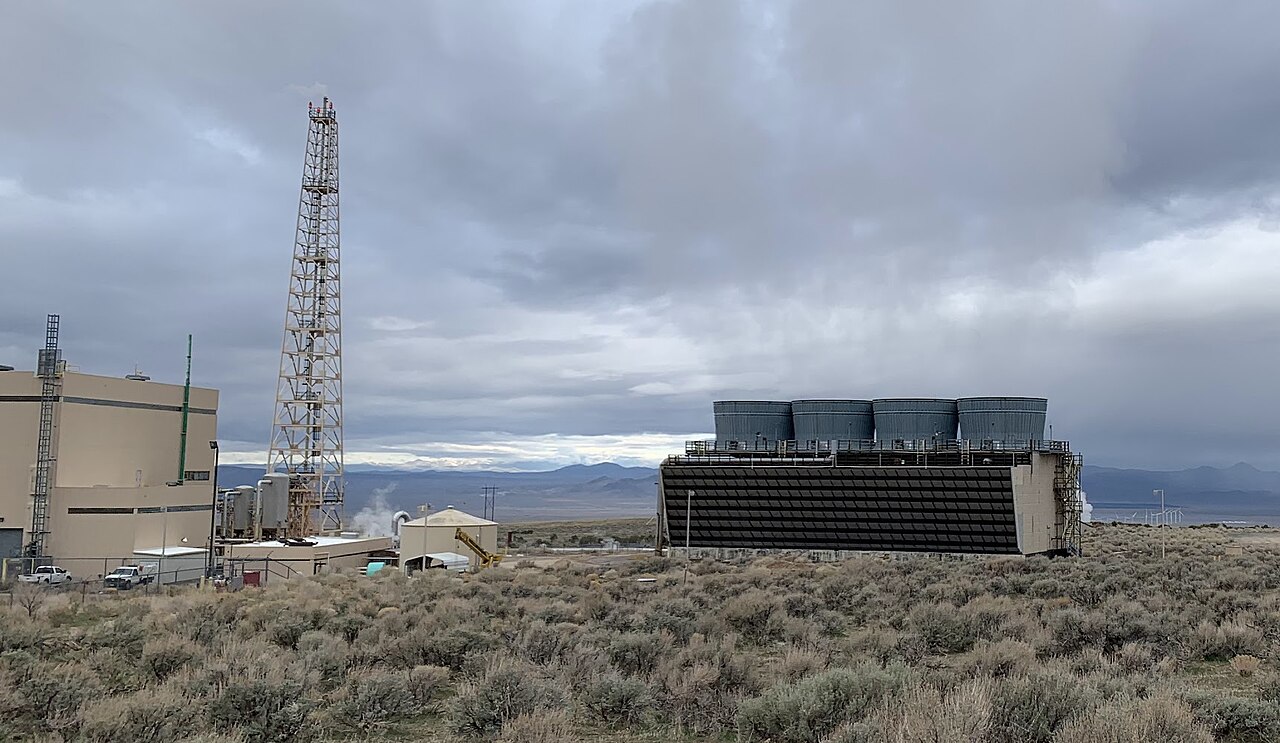
Cape Station is Fervo's enhanced geothermal development in Beaver County, Utah. According to the earnings release, GeoBlock 1, rated at 33 MW, was declared commercially operational on Sept. 30. Fervo says GeoBlock 2 has reached grid sync and is delivering test energy to the grid, and GeoBlock 3 is in cold commissioning. It expects GeoBlocks 2 and 3 to reach commercial operation by Jan. 1, 2027, which would complete Phase I.
Fervo puts the expected total cost of GeoBlocks 1 through 3 at about $7,000 per kilowatt. The company also reports a new resource study by the consulting firm DeGolyer and MacNaughton supporting approximately 8.4 GW of capacity potential at Cape Station, nearly double the prior estimate of 4.3 GW. That figure is a potential-capacity estimate, not installed or contracted capacity; the release lists capacity in operation at 36 MW and capacity under construction at 466 MW.
For background, Energy Tech's September coverage explains enhanced geothermal systems. It cites the U.S. Department of Energy in describing them as human-made reservoirs, created by injecting fluid deep underground and engineering new fractures so that fluid can circulate through hot rock and absorb its heat. Energy Tech says many areas lack enough natural permeability for traditional geothermal systems. It also quoted Michael Terrell, Google's head of advanced energy, on the agreement.
Spending and cash
The earnings release reports third-quarter capital expenditures of $256.7 million, compared with $226.5 million in the second quarter, and guides fourth-quarter capex to approximately $450 million to $500 million. Fervo reports unrestricted cash and cash equivalents of $1.9 billion at the end of the quarter. The company also says it has been selected for two potential U.S. Department of Energy awards totaling approximately $20.0 million, including funding for appraisal wells in Idaho and Nevada. CEO Tim Latimer is quoted in the release.
Why it matters for data center siting
The Fervo release is notable because it ties a geothermal contract to a named potential data center location. If the Utah expansion goes forward, Fervo says it could directly power a regional data center in Beaver County through a behind-the-meter arrangement. Beaver County is the location Fervo names for the potential data center, and the outcome depends on the regulatory approvals and feasibility work described above.
Residents and local officials should note that Fervo's release calls the Beaver County data center "potential." None of the sources reviewed for this article describe acreage, water use, jobs, or a site application for the campus.
What Happens Next
The next construction milestone Fervo has stated is commercial operation of Cape Station GeoBlocks 2 and 3 by Jan. 1, 2027, which would complete Phase I. Under the Google contract, first power is scheduled for mid-2028 and full capacity by the end of 2028. The roughly 600-MW expansion and any direct-to-load delivery to a Beaver County data center still require Google's acceptance of the option and regulatory approval, and final data center plans remain subject to engineering feasibility, state and local approvals, and commercial conditions, according to Fervo and APPA.
Sources
- Fervo Energy Reports Third Quarter 2026 Results (SEC Form 8-K, Exhibit 99.1, Nov. 9, 2026)
- American Public Power Association: Fervo Energy, Google Sign 396-MW Geothermal Energy PPA (Sept. 1, 2026)
- Energy Tech: Fervo Energy Expands Google Partnership through 396-MW Geothermal Deal in Utah (Sept. 2, 2026)
