
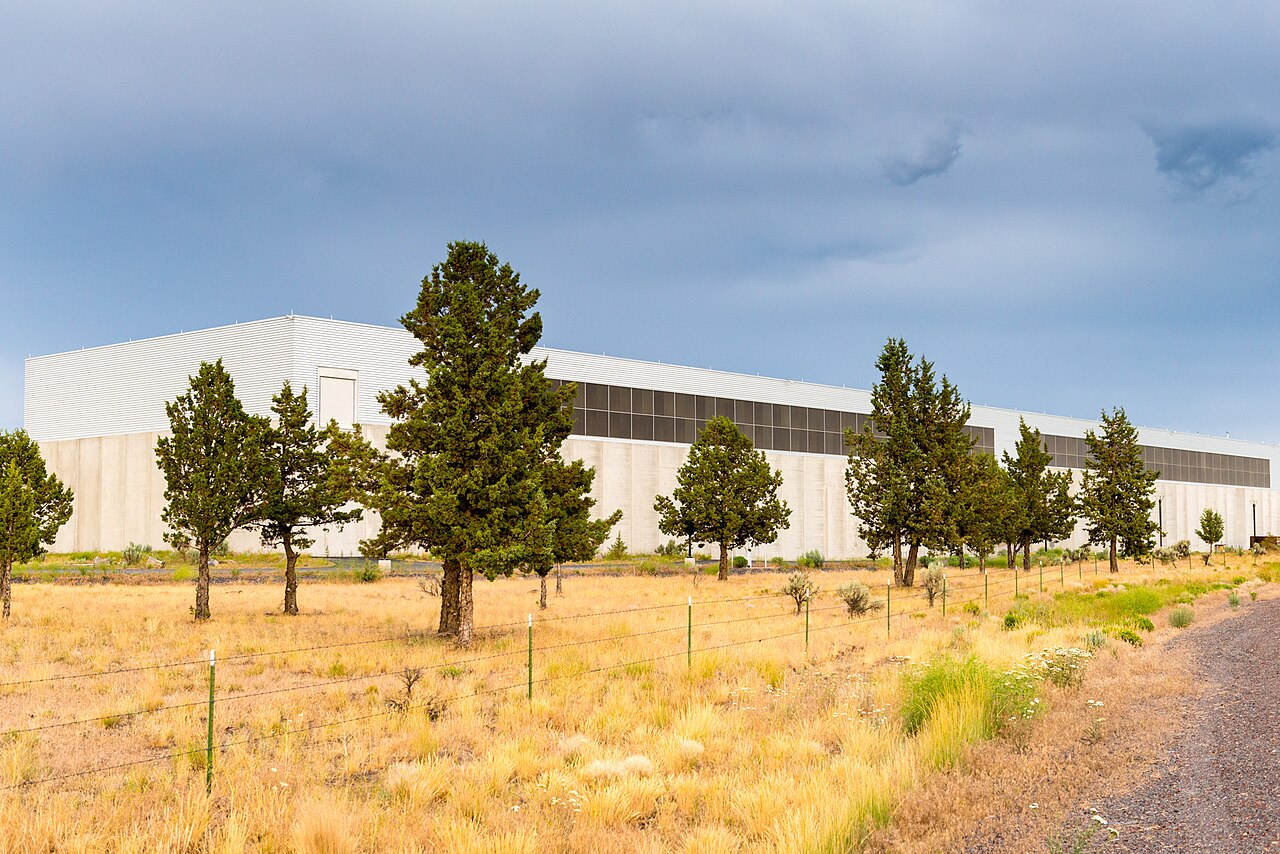
Meta has published its most detailed account so far of Prometheus, the AI training cluster at its New Albany, Ohio campus. In an engineering post dated Oct. 19, 2026, the company says the first phase of the cluster is complete and that the site will grow to about 1 million GPUs. Meta calls the project a "gigawatt-scale supercluster." The post doesn't state the facility's power capacity in megawatts.
The post covers hardware generations, network design, failure rates and the cluster's effect on the power grid. That last topic matters to utilities and local officials as much as to engineers. Below is a guide to what Meta and the outlets that covered the post have reported, and what they left out.
What is Prometheus, and what has it done so far?
Prometheus is a training supercluster built across several buildings on Meta's New Albany campus. The Next Web reports that it currently holds hundreds of thousands of Nvidia GPUs. StorageReview notes that two years ago the campus was a conventional data center serving web traffic.
According to ETIH, Meta used the completed first phase to train its Muse family of models, including Muse Wonder. Meta's post says the site is still growing toward roughly 1 million GPUs.
What hardware is inside?
The Next Web reports that the cluster runs on two Nvidia rack platforms today, with a third to be added:
- Catalina, based on the GB200 NVL72
- Clemente, based on the newer GB300 NVL72
- San Miguel, based on the Vera Rubin NVL72, which is still to come
StorageReview describes how the platforms differ. The GB200 system, which Meta calls Ariel, spreads one 72-GPU unit across two racks: 36 GPUs per rack, each GPU with 192GB of HBM3e memory. The GB300 version fits all 72 GPUs in a single rack with 288GB per GPU. StorageReview reports that the Vera Rubin rack carries 288GB of HBM4 memory per GPU and is rated at 2.52 exaFLOPS of FP4 compute.
Each generation draws more power per rack. Meta's post says the Vera Rubin compute trays push power above 170 kW per rack.
StorageReview also describes a design choice that matters for reliability. Each 72-GPU unit runs jobs on 64 GPUs and keeps 8 as spares. When a GPU fails, a spare takes its place and the job restarts from its last checkpoint instead of waiting on a hardware repair.
How is the network laid out?
Meta's post says the network inside each building connects up to 20,736 GPUs. A separate aggregation network joins the buildings across distances of 2 km to more than 100 km.
How often does it break, and how much has that improved?
At this scale, any hardware failure, network fault or software crash can interrupt a training job that uses thousands of GPUs. Meta's post says that in mid-2025, interruptions peaked near 1,000 events per 8,000 GPUs per day. The company says it has since cut that rate by 99%.
Meta's stated goal is two interruptions per 8,000 GPUs per day. The company says that equals a mean time between interruptions (MTBI) of about 100,000 GPU-hours. The Next Web reports that MTBI was about 47,000 GPU-hours at one point, has since risen above 54,000, and is aimed at about 100,000. By those figures, the cluster is a little over halfway to its target.
The Next Web also reports Meta's "goodput," the share of compute time that goes to useful training rather than restarts and recovery. Meta puts it above 85% in pre-training and above 90% in reinforcement learning.
What does it do to the power grid?
This section matters most outside the engineering world. The Next Web reports that the cluster's power draw can swing by 30% to 40%, and that starting or pausing a large job can shift tens of megawatts within seconds. The swings happen because thousands of GPUs move between heavy computation and synchronization together.
Large, fast swings like these can strain the utilities and grid operators that serve a campus. According to The Next Web, Meta manages them with software called Dynamo Dimmer, backed by batteries at rack, facility and grid level. Meta's post also cites "deep coordination with utility providers" and says it pays the full cost of energy for its New Albany site. The sources don't say how much battery capacity is installed or give details of that utility coordination.
How is it cooled?
ETIH reports that Prometheus uses a mix of cooling methods: modular air-assisted liquid cooling, plus liquid cooling built into the facility itself. ETIH says the newer buildings designed for AI use closed-loop systems. None of the sources give water-use figures.
What does this mean for Louisiana?
Meta's post says Hyperion, its upcoming supercluster in Richland Parish, La., is being designed with insights from Prometheus in mind, with closed-loop liquid cooling and full grid connectivity through its utility partner Entergy. The post doesn't say which other design choices carry over, and the sources give no new capacity, cost or schedule figures for Hyperion.
What the sources don't say
The coverage is detailed on hardware and reliability but leaves several gaps:
- No total power capacity in megawatts for the New Albany site beyond the "gigawatt-scale" label in the post's title.
- No total cost, no job figures and no acreage or floor area.
- No water consumption figures.
- No date for reaching about 1 million GPUs or for deploying the Vera Rubin-based San Miguel racks, which Meta describes only as "arriving soon."
What Happens Next
Meta's post says Prometheus will keep growing toward about 1 million GPUs. The Next Web reports that the next hardware platform is San Miguel, built on the Vera Rubin NVL72, following the GB200-based Catalina and GB300-based Clemente racks already in use. Meta says it is working toward a reliability goal of two interruptions per 8,000 GPUs per day, or about 100,000 GPU-hours MTBI, and that Hyperion in Richland Parish, La., is being designed with insights from Prometheus. None of the sources give a date for any of these steps.
