
Most AI data center announcements are about scale: hundreds of megawatts, gigawatt campuses and utility interconnection requests that take years to process. On Nov. 11, Utah-based Torus announced a product built on the opposite idea. Foundry is a line of prefabricated, modular AI inference units sized at 1 to 20 megawatts per site. According to the company, Foundry is designed to run on electrical capacity that is already sitting unused at individual transformers instead of waiting for new grid service.
On the same day, Torus said it had raised $500 million in growth capital. Magnetar led the round, with participation from ICONIQ, Origin Ventures, Ridgeline Partners and Trinity Capital, according to the company's press release. Construction Review Online described the raise as a Series C.
Every performance, schedule and capacity figure below comes from Torus. Neither independent outlet that covered the launch reported verifying them separately.
What Foundry Is
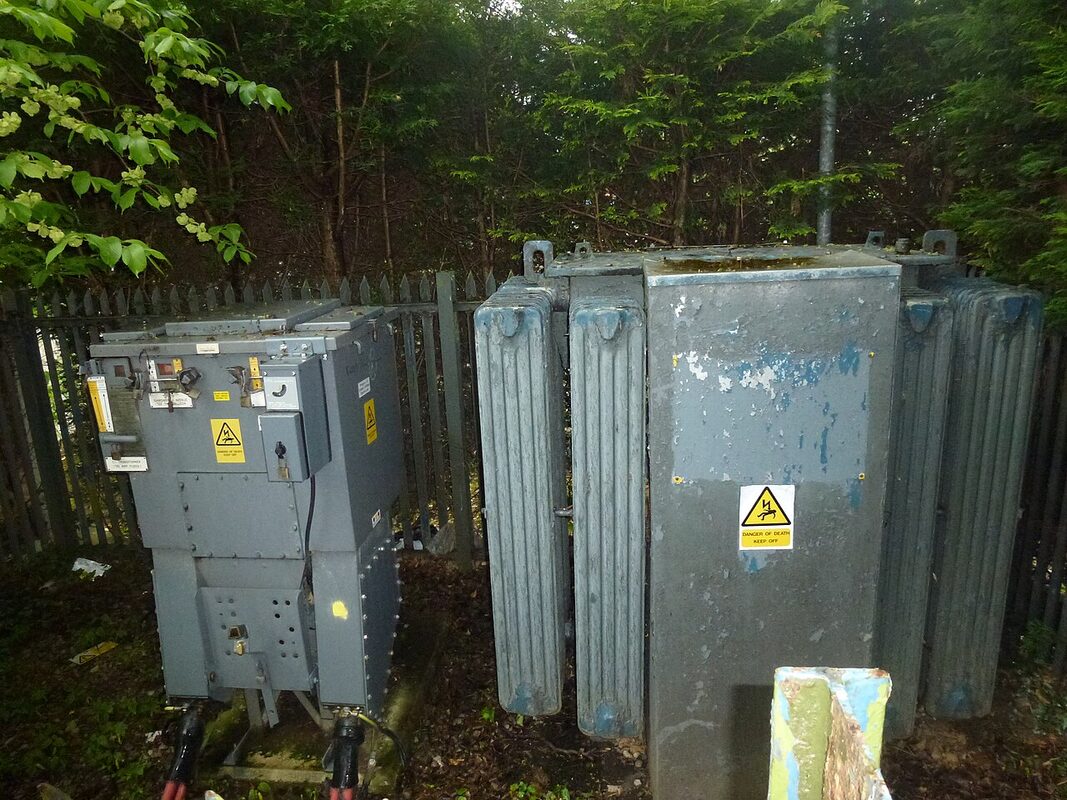
Torus describes Foundry as infrastructure for AI inference, the work of running trained models to answer queries, rather than for training new models. The press release puts each deployment at 1 to 20 MW. It says no building has to be constructed and that the smallest system is roughly the size of a small cargo van. Construction Review Online described the units as shipping-container-sized systems that combine battery storage with AI compute. The two descriptions may refer to different configurations in the 1-20 MW range. The sources do not settle the difference.
The company's headline schedule claim is 12 to 16 weeks from signed contract to running workloads. The press release and Tech Times, which repeated the detail from Torus, say site preparation takes about a week, and installation and commissioning take one to two days. Construction Review Online quoted Chief Executive Nate Walkingshaw as saying deployment could take approximately four months.
Torus presents Foundry as one of three products that work together, alongside Torus Reserve and Protect. In the press release, Reserve is the company's energy storage and management product, which provides load-shaping controls that govern how power is dispatched. The release says Foundry units also integrate inertial flywheel and battery storage. Tech Times noted that Torus also sells a flywheel product called Spin, rated for 25,000 cycles, but that the company did not say whether Foundry uses Spin.
For cooling, Torus says Foundry uses a closed-loop, waterless system that consumes 95% less water than evaporative coolers. That comparison is the company's figure. The press release does not give an absolute water-use number for a Foundry site.
The Grid Argument
The central claim in the launch is about power, not chips. Torus says Foundry operates behind the meter, using available headroom at individual transformers. In practice, the company is pitching sites where a transformer's existing load leaves enough spare capacity to carry an inference unit without infrastructure upgrades.
Tech Times placed the launch in the context of the interconnection backlog. It cited a Cleanview tracker, reported through the American Public Power Association, that counts 46 behind-the-meter data centers planning 56 GW of their own generation. It also cited an RMI finding that in 2025, the time from application to commercial operation for new generation in the PJM Interconnection market exceeded eight years, a figure Tech Times noted covers power plants, not data center loads. Foundry takes a different behind-the-meter approach from the projects in the Cleanview count. Torus is not proposing to build generation. It is proposing to fit compute into capacity that already exists, with storage covering demand peaks.
The sources do not say how much transformer headroom exists across a typical utility service territory, how a utility would treat a 20 MW load placed on spare capacity, or what interconnection or tariff review, if any, a Foundry site would need. The launch materials do not answer those questions.
Why Inference
Torus ties the product to growth in inference demand. Its press release cites McKinsey projections that data center demand for AI inference will grow 35% a year through 2030, compared with 22% for training. That figure comes from the press release's citation, not from a McKinsey document reviewed for this article.
The press release argues that inference runs continuously, serves users in real time and benefits from being distributed closer to where demand is, which it says is pulling compute toward on-premises and edge sites. Torus is betting that smaller sites deployed on existing power can come online faster than large new campuses.
Foundry is offered in three models, according to the press release: a powered shell without GPUs, a turnkey bare-metal unit with GPUs, and single-tenant inference capacity provided directly to enterprise customers. Torus says its first customers are Hydra Host and another AI cloud provider. Construction Review Online also reported Hydra Host as a customer. Neither independent outlet gave deployment sizes or locations for that customer.
Manufacturing and Scale Claims
Torus builds its systems at GigaOne, which the press release describes as a 545,000-square-foot plant in Salt Lake City. The company says GigaOne's Foundry line is online and will be capable of producing 500 MW of IT load, with plans to expand to 1 GW "in the near future." The press release gives no date for the expansion.
On deployments, Torus says it has thousands of GPUs deployed today and plans more than 47,000 GPUs in Foundry units by the end of 2027. The company did not break down the current figure further, and none of the sources identify the GPU models involved.
According to the press release, the $500 million will fund the continued expansion of GigaOne and deployments of Reserve and Foundry across the United States. Construction Review Online reported that the proceeds support Foundry manufacturing. Walkingshaw is quoted in the company's announcement as saying: "Most providers are bringing power to the chips. Foundry brings the chips to power."
What Is Not Yet Known
- Site list. None of the sources name specific Foundry sites, host utilities or transformer locations.
- Unit configurations. The press release describes the smallest system as about the size of a small cargo van. Construction Review Online described shipping-container-sized units. The sources do not say how many units make up a 20 MW site.
- Storage hardware. Torus has not said whether Foundry's storage includes its Spin flywheel, according to Tech Times.
- Independent verification. The 12-16 week schedule, the water comparison, the GPU counts and the plant capacity are all company statements.
What Happens Next
The only dated milestone Torus has put on the record is its target of more than 47,000 GPUs deployed in Foundry units by the end of 2027. The company also says the new funding will pay to expand GigaOne, and that the Foundry line is planned to grow from 500 MW to 1 GW of IT load capacity, but it has not published a schedule for that expansion. The sources reviewed for this article do not identify any regulatory filing, utility proceeding or local approval tied to a specific Foundry deployment.
Sources
- Torus Launches Modular AI Infrastructure, Foundry, to Meet Surging AI Inference Demand and Secures $500M in Funding (Torus press release, Nov. 11, 2026)
- Utah Startup Torus Raises $500M for Prefab AI Data Center Built to Skip Grid Queue (Tech Times, Nov. 12, 2026)
- Utah-Based Torus Raises $500 Million to Develop Foundry Modular AI Data Center Technology (Construction Review Online, Nov. 11, 2026)
