
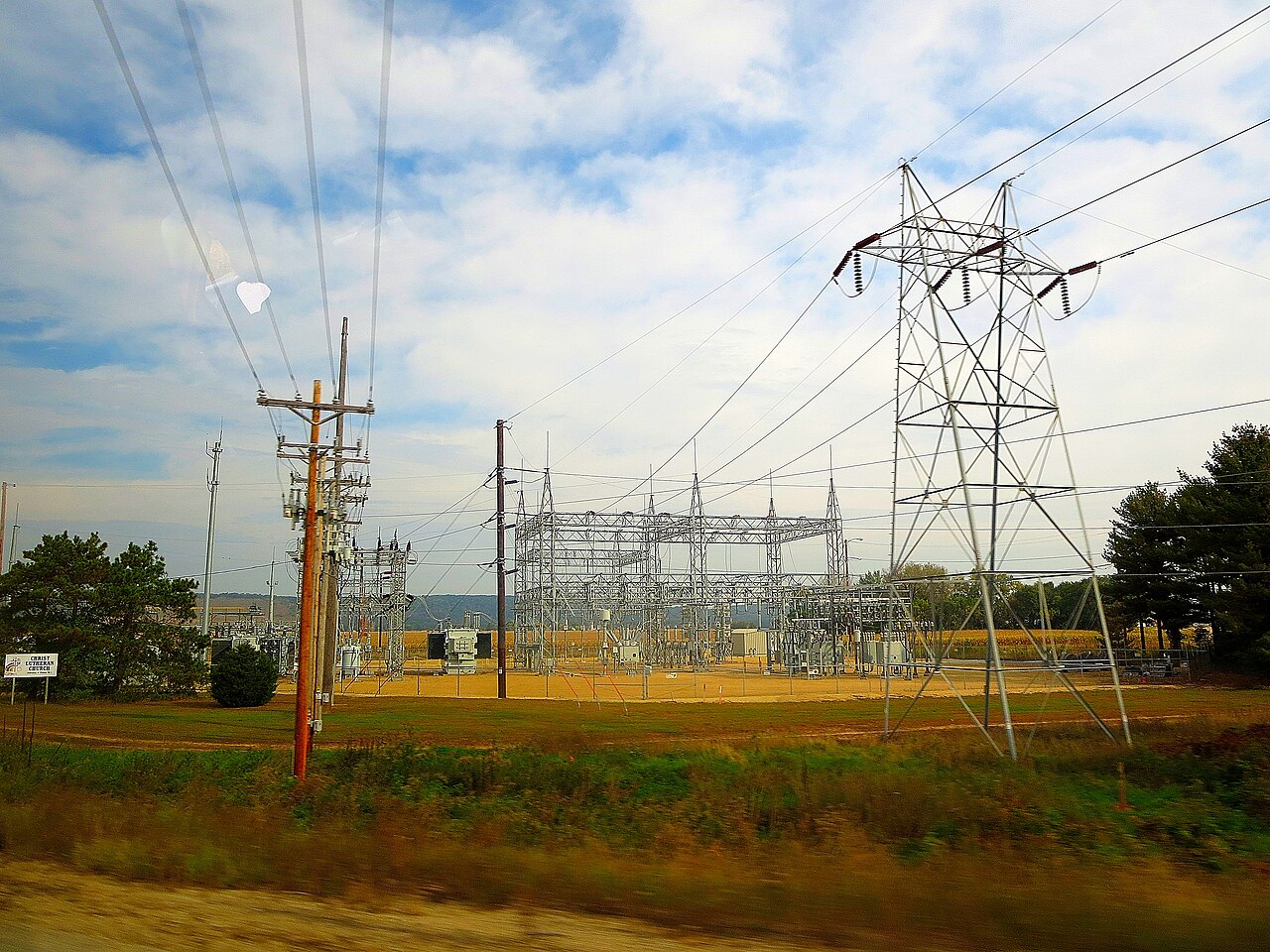
Alliant Energy says data center contracts now account for 3.4 gigawatts of demand on its two utility systems, and the Midwest holding company has raised its spending plan to match. In its third-quarter 2026 results, released Oct. 29 as an exhibit to a Form 8-K, the company said its 2027-2030 capital expenditure forecast rose 19% to $15.9 billion. It also said peak demand on its systems is expected to grow about 60% by 2031.
Alliant owns two regulated utilities: Interstate Power and Light (IPL) in Iowa and Wisconsin Power and Light (WPL) in Wisconsin. According to the earnings release, the 3.4 GW of contracted data center demand is held across both utilities. The quarterly 10-Q filed with the SEC describes individual agreements and regulatory requests in each state, including a signed Iowa service agreement and a pending Wisconsin tariff. The biggest pending item is a proposed WPL tariff for large-load customers that would set multi-year financial commitments for qualifying customers.
The Headline Numbers
In the Q3 release, Alliant made these changes to its outlook:
- Contracted data center demand: 3.4 GW across IPL and WPL, according to the release.
- Peak demand: expected to rise approximately 60% by 2031, according to the release.
- Capital plan: the 2027-2030 capex forecast was raised 19% to $15.9 billion, according to the release.
- 2027 earnings guidance: $3.63 to $3.73 per share, according to the release.
- Iowa rates: the release says IPL's retail electric base rate stability plan was extended through 2030.
The release reported third-quarter GAAP earnings of $1.52 per share, up from $1.09 a year earlier. OilPrice.com, reporting on the results, said third-quarter net income rose 42% to $398 million from $281 million and revenue rose 6% to $1.29 billion. The release includes comments from CEO Lisa Barton.
In the 10-Q, the company says it expects higher retail electric sales in 2027, driven by large-load growth customers.
What the 10-Q Shows About Individual Contracts
The quarterly filing describes several separate steps in Iowa and Wisconsin. Each one is at a different stage of contracting or regulatory review. The 10-Q excerpts reviewed here do not tie these individual items to the 3.4 GW total, so they should not be read as adding up to it.
Iowa: a signed 370 MW agreement and a new ICR request
According to the 10-Q, IPL entered into an electric service agreement in April 2026 with a customer that currently expects to build a data center in IPL's service territory, with contracted peak demand of approximately 370 MW. The filing says the actual timing and amount of increases in IPL's load are subject to various factors, including interconnections. DataCenterFeed is not identifying the customer.
The 10-Q also says that in October 2026, IPL asked the Iowa Utilities Commission (IUC) to approve an individual customer rate (ICR) for a data center expected to be constructed in its service territory. The company expects a decision from the IUC in the first quarter of 2027, according to the filing.
Wisconsin: one approved ICR, and a tariff for large-load customers
According to the 10-Q, the Public Service Commission of Wisconsin (PSCW) approved an ICR in June 2026, subject to certain conditions, for a customer constructing a data center in WPL's service territory. The filing says that in connection with that approval the PSCW directed WPL to file a large load tariff applicable to all customers with demand of 100 MW or greater.
In September 2026, WPL applied to the PSCW for approval of that large-load tariff, according to the filing. A tariff applies to every customer that meets its threshold, while an ICR is set for an individual customer. The 10-Q says the proposed tariff would require qualifying customers to commit to an initial service term of 15 years and includes:
- minimum demand commitments;
- termination charges;
- customer reimbursement obligations; and
- credit support requirements.
According to the 10-Q, the proposed tariff is intended to require customers served under it to pay the generation, distribution, transmission, operating and other costs associated with serving their load, and is designed to help ensure those costs are not subsidized by or shifted to other customers. Alliant says it expects a PSCW decision in the first half of 2027.
What Management Said on the Call
On the Oct. 30 earnings call, according to a machine-generated transcript published by The Motley Fool, management gave more detail on how the capital plan could grow. Statements in machine-generated transcripts may differ from what was actually said. The figures below are attributed to that transcript, not to Alliant's SEC filings.
- More load in the pipeline: According to the transcript, management said it expects approximately 1 additional gigawatt of contracted large load within the next six months, and that it would update the capex plan accordingly.
- Capex per gigawatt: According to the transcript, CFO Robert Durian put the additional capital at approximately $2 billion to $3 billion per gigawatt of additional load, primarily for capacity resources.
- Growth targets: The transcript records a 13% expected investment growth rate and an earnings growth target of 8% or more for 2027-2030.
- Federal financing: According to the transcript, management said the U.S. Department of Energy had closed on a $5.1 billion guaranteed loan program with Alliant, and estimated up to $1.2 billion of cumulative customer savings over the life of the 30-year loans compared with traditional debt financing.
- Equity: According to the transcript, about $1.1 billion of the company's $2.7 billion in common equity needs through 2030 has been secured through forward equity agreements.
The transcript is inconsistent on how many data center sites or projects make up the contracted total. It refers at different points to three sites and to five data centers. DataCenterFeed is not reporting a site count until it can be confirmed against a company filing.
Why This Matters Beyond Alliant
The Alliant filings show two mechanisms in use for serving data centers: individual customer rates, requested in Iowa and approved in Wisconsin, and a proposed standing tariff in Wisconsin that would set terms for customers at or above 100 MW. The PSCW decision on WPL's application, expected in the first half of 2027, covers the 15-year initial term, minimum demand commitments, termination charges, reimbursement obligations and credit support requirements as WPL filed them.
For residents of IPL and WPL service areas, the release says IPL's retail electric base rate stability plan now runs through 2030, with the company describing it as providing Iowa retail electric customers predictability. The Wisconsin tariff application is the large-load regulatory item pending on the WPL side.
What Happens Next
According to Alliant's 10-Q, these steps are on the regulatory calendar:
- Iowa Utilities Commission, Q1 2027: a decision on IPL's October 2026 request for ICR approval for a data center customer.
- Public Service Commission of Wisconsin, first half of 2027: a decision on WPL's September 2026 large-load tariff application.
Separately, according to the Motley Fool transcript of the Oct. 30 earnings call, management said that if it contracts the approximately 1 additional gigawatt of large load it expects within six months, it would update the capital expenditure plan.
Sources
- Alliant Energy Announces Third Quarter 2026 Results and 2027 Guidance (Form 8-K Exhibit 99.1, Oct. 29, 2026)
- Alliant Energy Form 10-Q for the quarter ended September 30, 2026 (SEC EDGAR)
- Alliant Energy (LNT) Q3 2026 Earnings Call Transcript (Motley Fool, Oct. 30, 2026)
- Alliant Energy Boosts Capex to $15.9 Billion as Q3 Earnings Surge (OilPrice.com, Oct. 29, 2026)
