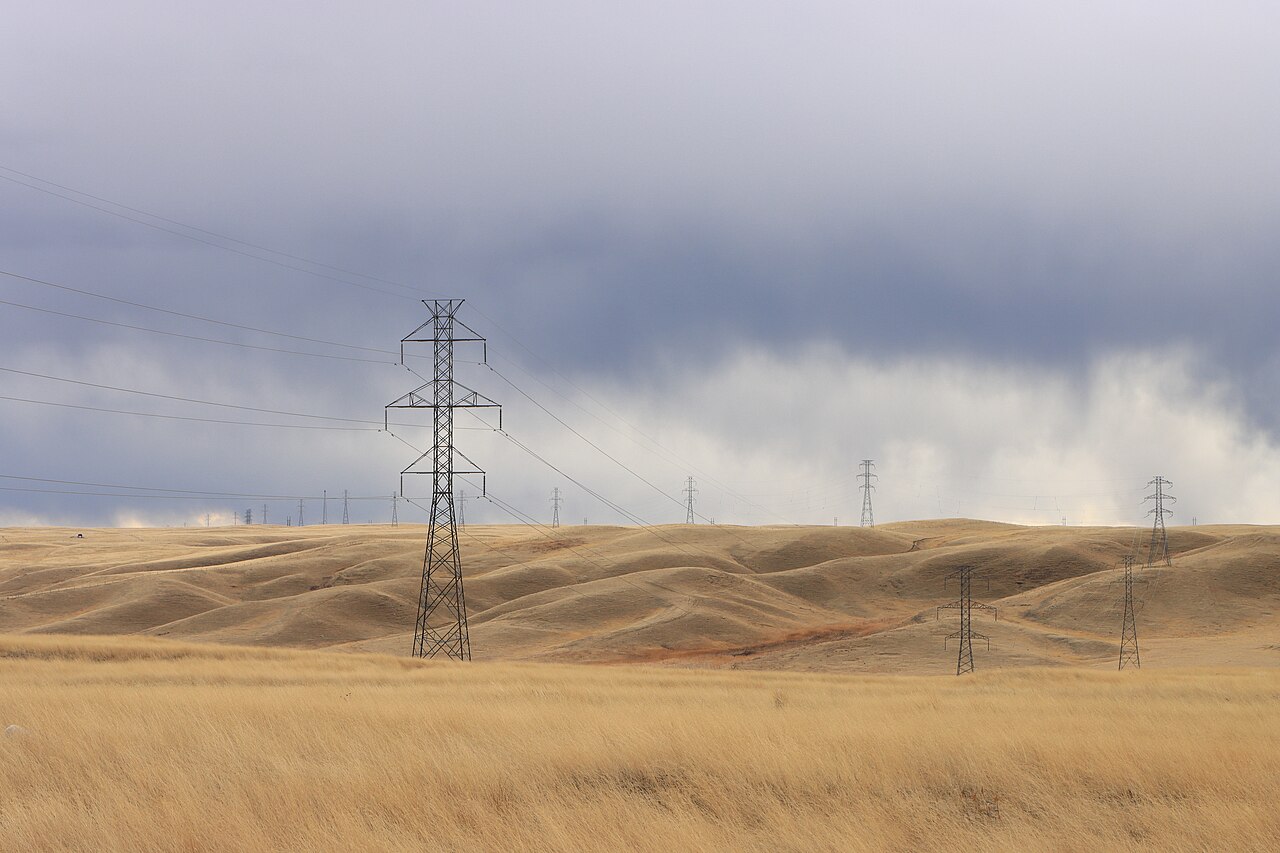
Cheyenne Light, Fuel and Power, the Wyoming utility that serves the state's capital, told federal regulators on Tuesday, Nov. 24, that it has signed agreements to build distribution and transmission infrastructure for three planned Microsoft data centers, Utility Dive reported. Under the agreements, Microsoft pays for the work through "contribution in aid of construction" payments, a standard utility mechanism in which the customer requesting new facilities covers their cost.
The filing is one part of a larger build. Cheyenne Light, which its parent company's financial reports call Wyoming Electric, also has two transmission projects totaling $686 million and a new tariff for large customers before the Wyoming Public Service Commission (PSC), according to the Black Hills Corp. quarterly report for the period ended Sept. 30, filed with the Securities and Exchange Commission.
What Was Filed, and Why at FERC
The agreements filed at the Federal Energy Regulatory Commission are redacted, according to Utility Dive, so the size of the three Microsoft projects and the commercial terms are not public.
Cheyenne Light said it does not believe FERC has jurisdiction over the agreements, which it treats as retail arrangements, but filed them for review "out of an abundance of caution," according to Utility Dive. The article ties that decision to the agency's recent statements on cost recovery agreements for transmission costs caused by large-load customers. Retail electric service is normally regulated by state commissions, while FERC oversees interstate transmission and wholesale sales.
An Earlier Microsoft Filing Shows the Model
A filing Cheyenne Light made at the Wyoming PSC earlier this year shows how such arrangements have been structured. On March 13, 2026, the utility filed for a certificate of public convenience and necessity (CPCN) for a Microsoft project known as "Bronco Filly," near the Cheyenne Prairie Generating Station, New Project Media reported. That project calls for a new 115-kV Bronco substation with 12 terminals and two 115/24.9-kV transformers.
According to New Project Media, Microsoft is funding the roughly $39 million capital cost under a Facility Expansion Agreement and also covers operations and maintenance costs and ad valorem taxes. Cheyenne Light said the project would have no rate impact on other customers. The utility asked the PSC to approve it by June 16, 2026. The filing projected load of 12 MW by the end of 2027, 30 MW by the end of 2028 and 48 MW by the end of 2029, New Project Media reported.
The $686 Million Transmission Request
Separately from the customer-funded Microsoft work, Wyoming Electric has asked the Wyoming PSC to approve two transmission projects, according to the Black Hills 10-Q:
- South Cheyenne Transmission Project: $80 million for new substations and nearly 15 miles of lines. The CPCN application was filed Sept. 1, 2026, and the project would enter service in phases from late 2027 through 2028.
- Aeolus Transmission Project: $606 million for two new 230-kV lines spanning approximately 125 miles. The CPCN application was filed Nov. 2, 2026, and completion is expected by mid-2029, pending PSC approval.
The 10-Q also says Wyoming Electric filed a request on June 19, 2026, for a new Large Customer Transmission Cost Adjustment Mechanism, or LCTCAM, tariff. According to the 10-Q, the tariff would directly recover transmission investment costs from Large Power Contract Service customers who are served by, and benefit from, the transmission facilities, and the company expects to request recovery of both projects' costs under it. Utility Dive reported that, under the tariff, large-load customers would pay their share of the transmission expansion. The PSC has not yet ruled on the request.
Google's Separate Project
The utility is also serving a planned Google data center under its Large Power Contract Service (LPCS) tariff. According to the 10-Q, that arrangement is contracted to be served through a total resource mix of 2.7 GW, including reserve margins: up to 590 MW of grid-connected service plus about 2.1 GW of third-party resources managed through a privately managed microgrid. Energy service is expected to begin in late 2027 and ramp to projected peak load by the end of 2030. The 10-Q puts the associated generation investment at about $1.8 billion and says Google has provided $398.8 million in refundable advances, which the company expects to repay by June 30, 2027.
The 10-Q says the company expects to construct 564 MW of new company-owned natural gas generation between 2027 and 2029 through a non-regulated affiliate. Utility Dive reported that the company expects the Google deal to add about $150 million a year to net income beginning in 2030.
A Small Utility With a Large Pipeline
The scale of the requests stands out against the size of the system. Utility Dive, citing the Black Hills SEC report, said Cheyenne Light has about 46,000 retail electric customers; the 10-Q reports an all-time system peak demand of 439 MW, set on July 20, 2026, up from 379 MW in June 2025. Utility Dive reported that Black Hills officials described a 3-GW data center pipeline, including 600 MW of Microsoft and Meta projects, on a Nov. 5 earnings call, plus initial talks on another 2.5 GW of early-stage opportunities.
Ownership of the utility changed this month. Black Hills Corp. and NorthWestern Energy Group completed a merger on Nov. 13 that created Bright Horizon Energy Corp., now Cheyenne Light's parent, according to Utility Dive.
What Happens Next
FERC has not yet acted on the Nov. 24 filing, and the sources do not report a deadline for it. Cheyenne Light's position is that the agreements fall outside FERC's jurisdiction.
At the state level, the Black Hills 10-Q says a Wyoming PSC decision on the LCTCAM tariff is expected in the first quarter of 2027, and decisions on the South Cheyenne and Aeolus CPCN applications are expected by mid-2027. Utility Dive's article gave mid-2027 for the tariff decision. The 10-Q gives late 2027 as the start of in-service phasing for the South Cheyenne project and of energy service to Google's data center.