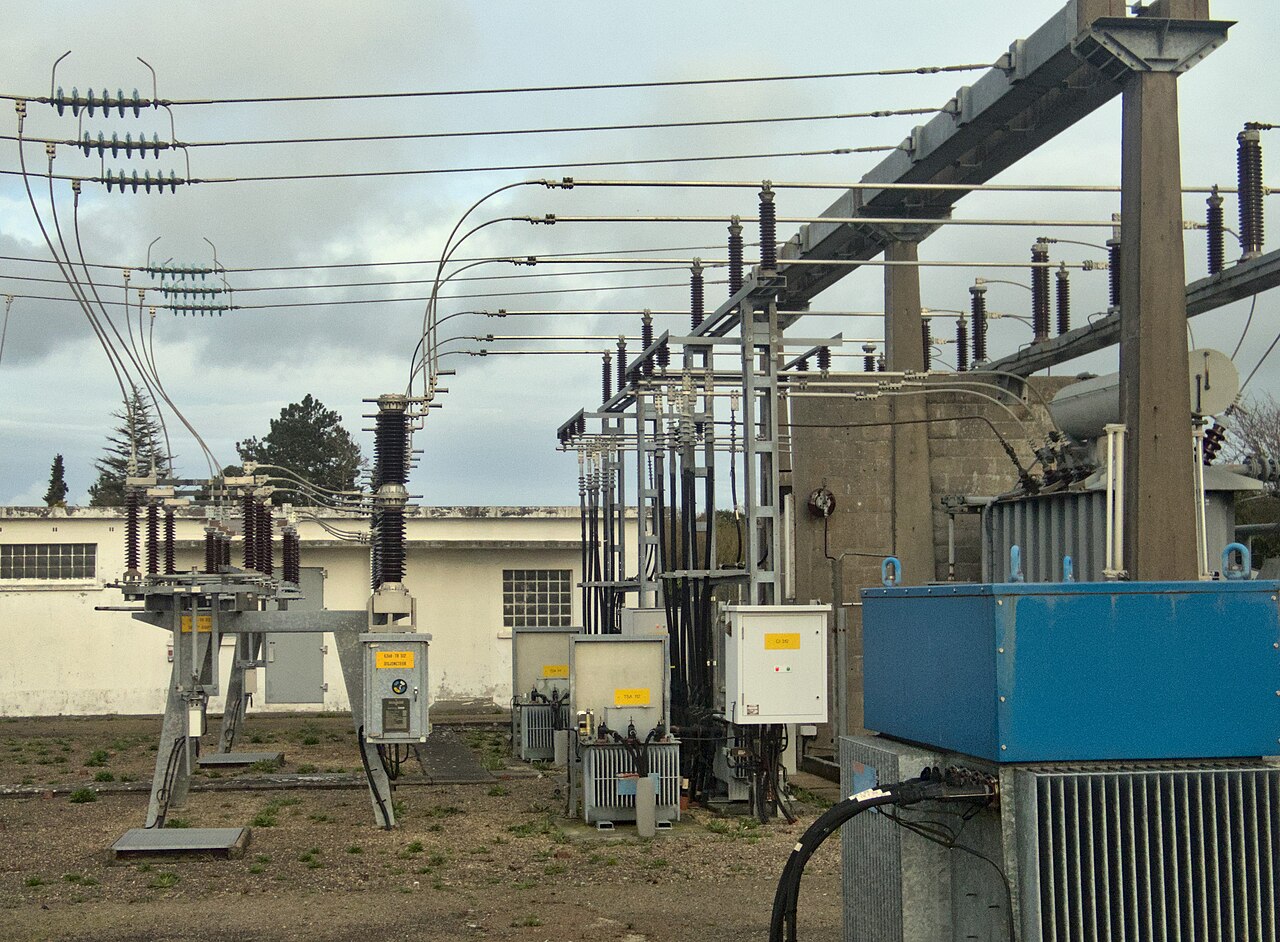
Large data centers have so far stayed outside the mandatory reliability rules that apply to power plants and transmission owners. That could change. The North American Electric Reliability Corporation (NERC) has filed two petitions with the Federal Energy Regulatory Commission (FERC). Together they would require the owners and operators of large "computational load" sites to register with NERC and comply with three new enforceable Reliability Standards.
Both filings went in during the past six weeks. A registration petition was filed Oct. 21 in Docket RR27-1-000, and a standards petition followed on Nov. 16. They answer a directive FERC issued in July. The filings came back into the news on Nov. 24, when IEEE Spectrum reported on the grid events behind the rules, including a July 22 incident in which Northern Virginia data centers drawing 3,800 MW disconnected from the grid after a routine fault.
The July Order That Started the Clock
On July 16, 2026, FERC issued an order in Docket RD26-7-000 (196 FERC ¶ 61,031) directing NERC under Section 215(d)(5) of the Federal Power Act to develop rules for what the order calls computational load integration. The order is signed by Chairman Swett and Commissioners Rosner, See, Chang and LaCerte. It sets three deliverables:
- new or modified Reliability Standards and NERC Glossary definitions for computational load integration, due by Dec. 31, 2026;
- revisions to the registry criteria in NERC's Rules of Procedure, also expected by Dec. 31, 2026; and
- an informational workplan for additional standards, due by March 1, 2027.
The order's background cites the Department of Energy's Oct. 23, 2025 advance notice of proposed rulemaking on large loads (Docket RM26-4-000).
Who Would Have to Register
The Oct. 21 petition sets out who would be covered. According to an Oct. 30 client alert from the law firm Pillsbury, NERC asked to register the owners and operators of sites with at least 50 MW of total connected load supplied through equipment connected to the Bulk Power System at 100 kV or above.
Pillsbury notes that this petition decides only who must register. The substantive obligations sit in separate standards that need their own FERC approval. Pillsbury also reports NERC's projection that computational load could make up about 90% of large load by the end of 2027.
According to Pillsbury, the registration petition proposes two new categories in NERC's Compliance Registry: Computational Load Owner and Computational Load Operator. According to the American Public Power Association (APPA), the standards petition introduces three new Glossary definitions: Computational Load Site, Computational Load Owner and Computational Load Operator. APPA also reports that NERC proposes updating the definition of Operating Instruction to cover instructions pertaining to Computational Load Sites.
The Three Proposed Standards
APPA reported that NERC submitted the standards petition on Nov. 16. It asks FERC to approve three standards:
- CLO-001-1 covers interconnection, studies and modeling, in requirements R1 through R11.
- CLO-002-1 covers operational data and communications, in requirements R1 through R15. Among them, Computational Load Operators must respond to Operating Instructions from the grid operator.
- CLO-003-1 covers protection coordination and disturbance monitoring, in requirements R1 through R10.
The petition also proposes changes to two existing facility-connection standards, FAC-001-5 and FAC-002-5, so that they exclude Computational Load Sites, according to APPA. APPA says the purpose is to avoid duplicative requirements. APPA reported that NERC asked FERC to act expeditiously, citing broad stakeholder support.
IEEE Spectrum summed up the practical effect: if FERC approves the standards, data center owners would have to disclose how their facilities respond to faults, record events and follow grid operators' instructions. Spectrum described the standards as NERC's first for computational loads and said NERC adopted them in October.
Why Grid Planners Are Concerned
IEEE Spectrum's Nov. 24 report focused on how large computing loads behave during grid disturbances. On July 22, according to the report, Northern Virginia data centers drawing 3,800 MW disconnected after a routine transmission-line fault. Spectrum also cited a draft NERC report, not yet published, that counts at least eight cases since 2022 in which data centers shed between 200 and 1,800 MW.
When that much demand disappears at once, grid operators have to rebalance the system quickly. Spectrum also described a 2025 NERC white paper showing load swings inside a single facility: a 50-MW section of a 200-MW data center ramped from 6 MW to 30 MW in a quarter of a second. The article quotes NERC chief engineer Mark Lauby on the issue.
The proposed standards target both problems. CLO-003-1 deals with protection coordination and disturbance monitoring, which covers how a site's equipment reacts to a fault and what it records. CLO-002-1 deals with operating data and instructions, which covers what a site tells the grid operator and what the operator can direct the site to do. According to APPA, CLO-001-1 would require transmission planners and planning coordinators to study the impact of interconnecting new or changed Computational Load Sites.
What It Means for Developers and Communities
For developers, the proposals would make reliability compliance an enforceable obligation for registered owners and operators of covered sites, if FERC approves both petitions. Pillsbury notes that once the standards are approved and effective, registered entities would be subject to NERC audits and enforcement, including potential penalties. Under the Oct. 21 petition, coverage turns on two thresholds as Pillsbury describes them: at least 50 MW of total connected load, and supply through Bulk Power System equipment at 100 kV or above.
For utilities and others near proposed campuses, the standards would set national requirements for how large computing loads are studied before they connect and how they behave once they do. IEEE Spectrum's report tied the new rules to disturbances such as the 3,800-MW Northern Virginia disconnection.
The sources reviewed for this article do not say what compliance would cost, how many sites would be registered, or what implementation timeline the petitions propose. DataCenterFeed has not reviewed the petitions directly.
What Happens Next
Both petitions are now pending before FERC. In the sources reviewed, FERC had not yet acted on the Oct. 21 registration petition (Docket RR27-1-000) or the Nov. 16 standards petition. NERC has asked the commission to act expeditiously, according to APPA. The registration criteria and the standards need separate FERC approval, according to Pillsbury.
The July 16 order also sets another deadline. NERC must file an informational workplan for additional computational load standards by March 1, 2027.
Sources
- FERC - Order Directing NERC to File Reliability Standard(s) Pertaining to Computational Load Integration, Docket RD26-7-000 (July 16, 2026)
- American Public Power Association - NERC Seeks FERC Approval of Proposed Reliability Standards Tied to Integration of Computational Loads (Nov. 17, 2026)
- Pillsbury - NERC Proposes Federal Reliability Registration for Large Data Centers (Oct. 30, 2026)
- IEEE Spectrum - Data Centers Must Disclose Erratic Power Use, Regulators Say (Nov. 24, 2026)