
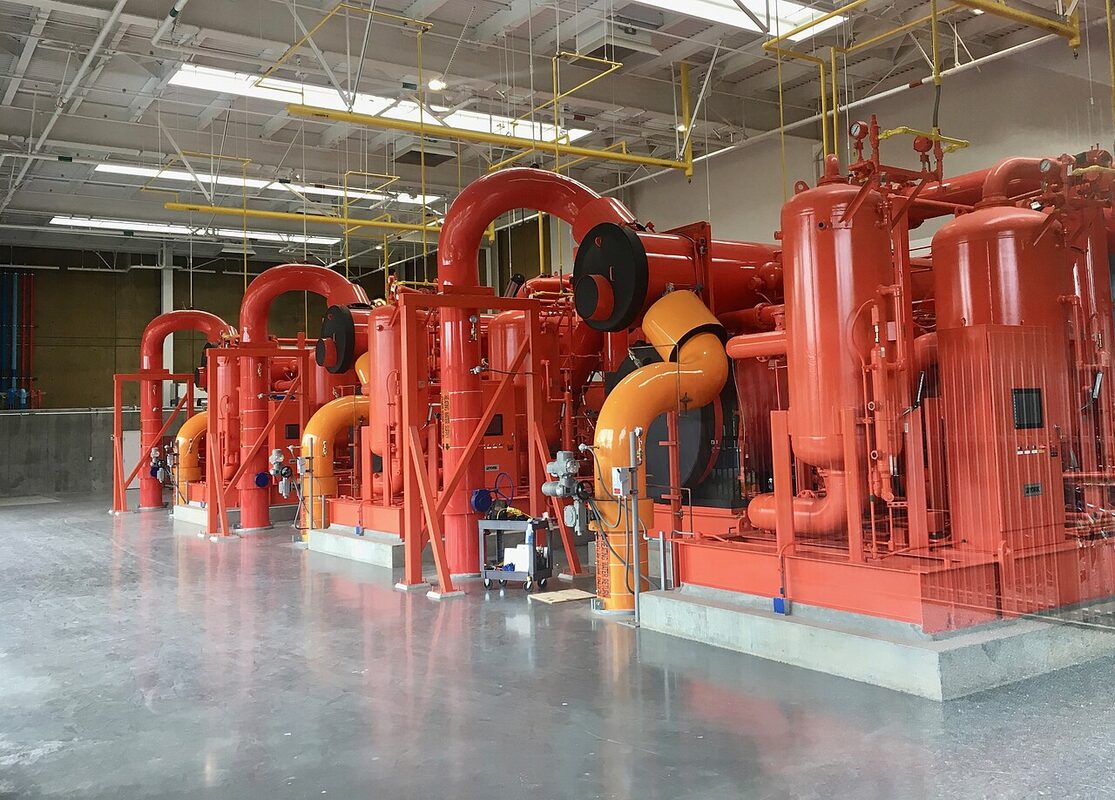
Most operators can see the temperature, pressure and flow in their direct liquid cooling loops. Few can see what is happening to the fluid itself. Ecolab is betting that this gap matters more as rack densities climb. At SC26 in Chicago this month, the company introduced what it calls an integrated cooling platform. It joins hardware from CoolIT Systems, the direct liquid cooling maker Ecolab acquired in July 2026, with Ecolab's fluid management, digital monitoring and service business.
The main piece of hardware is the CoolIT CHx 3000, a new coolant distribution unit (CDU) with Ecolab's 3D TRASAR sensing built in. According to The Fast Mode's report on the launch, Ecolab describes the combination as "the first smart thermal management system for direct liquid cooling." That is the company's claim. It has not been independently verified.
What the CHx 3000 Is
A CDU sits between a facility's water system and the coolant that runs through cold plates on servers. It moves heat from one loop to the other while keeping the two fluids apart. Data Center Frontier reports that the CHx 3000 is a liquid-to-liquid unit rated for 3 MW of cooling capacity at a 3°C approach temperature difference, with a specified flow rate of 4,500 liters per minute. These are vendor ratings. The sources do not include independent test results.
In a walkthrough filmed for Data Center Frontier at the 2026 OCP Global Summit in San Jose, CoolIT Director of Marketing Charles Robison showed the unit's pumps, large 25-micron filters, heat exchanger and control system. Data Center Frontier reports that all of these parts are accessible from the front of the CDU.
Why Monitor Coolant Chemistry?
Data Center Frontier notes that traditional cooling monitoring typically emphasizes temperature, pressure and flow, and that Ecolab's technology adds visibility into fluid chemistry and contamination. Citing a November 10 technical report from CoolIT, Data Center Frontier says the integrated monitoring system tracks parameters including:
- Glycol concentration
- pH
- Turbidity
- Conductivity
- Differential pressure
Data Center Frontier reports that these measurements can help identify conditions that contribute to corrosion, biological growth and restricted flow through cold plate microchannels. The outlet adds that the aim is to let operators spot deteriorating conditions before they compromise the system.
"3D TRASAR, and you can see the array of sensors here, allows coolant health monitoring," Robison says in the video. "It allows people to see real-time what's going on with the coolant. So before it goes out of spec, they know what's happening and they can address it."
The Fast Mode's account of the announcement says the integration enables real-time visibility into cooling system performance, so operators will improve reliability, optimize water and energy use, and unlock greater computing capacity at scale. The CoolIT newsroom version of the release says the platform brings together technologies "traditionally managed separately" to help AI data centers deploy faster and "dramatically improve water and energy efficiency." The sources reviewed do not give figures for those efficiency gains.
The Server Side: Fanless Cold Plates
The Data Center Frontier demonstration also showed a fifth-generation cold plate loop that CoolIT developed for a server OEM. The design is intended to remove the need for conventional server fans. "It's a fanless design," Robison says. "So we're doing 100% heat capture through this cold plate loop."
Data Center Frontier puts that claim in context. It cites a September 2026 CoolIT technical discussion of fanless AI servers, in which the company described near-total liquid heat capture as an increasingly practical requirement for very high-density systems. CoolIT identifies less than 1% of server heat remaining for air cooling as an achievable engineering target, while acknowledging that literal 100% capture is difficult to establish.
Robison's walkthrough also covered CoolIT's range of cooling fluids, spanning pure water and multiple propylene glycol-based formulations. Data Center Frontier states that the demonstration took place at OCP 2026 and that Ecolab formally introduced the platform at SC26 on November 16.
The Business Behind the Launch
According to The Fast Mode, the launch builds on Ecolab's expanding position across the AI value chain, including ultrapure water for semiconductor manufacturing through the acquisition of Ovivo Electronics, water and process technologies supporting power generation, and advanced direct liquid cooling through CoolIT.
The Fast Mode reports Ecolab's figures for the segment. The company says its Global High-Tech business is growing more than 25% annually and is approaching $1.5 billion in 2026 annualized sales, a figure that includes Ovivo and CoolIT. Ecolab says it is targeting $4 billion in annual High-Tech sales by 2030, with operating income margins of 25%. These are company figures and targets, not audited results.
The Fast Mode attributes the announcement's quote to Ecolab Chairman, President and CEO Christophe Beck: "For too long, cooling hardware, fluid management and digital technology have operated separately. We're bringing them together to help our customers get more computing power, faster, while using less water and energy."
What Operators Should Ask
For facility teams looking at the CHx 3000, the sources leave several practical questions open:
- Availability and pricing. None of the announcements reviewed by DataCenterFeed give a shipping date, lead time or price for the CHx 3000.
- Integration. The sources do not say how 3D TRASAR data reaches building management or DCIM systems, or whether it requires an Ecolab service agreement.
- Performance at rated conditions. The 3 MW rating is stated at a 3°C approach. Capacity at other approach temperatures is not given in the sources.
- Independent validation. The "first smart thermal management system" claim and the efficiency benefits come from Ecolab. Third-party data has not been published in the sources reviewed.
What Happens Next
The sources do not name a scheduled shipping date, customer deployment or other dated milestone for the CHx 3000 or the integrated platform. The only forward date on the record is Ecolab's stated target, reported by The Fast Mode, of $4 billion in annual High-Tech sales by 2030 at 25% operating income margins. DataCenterFeed will report availability, pricing or first deployments when Ecolab or CoolIT announce them.
