
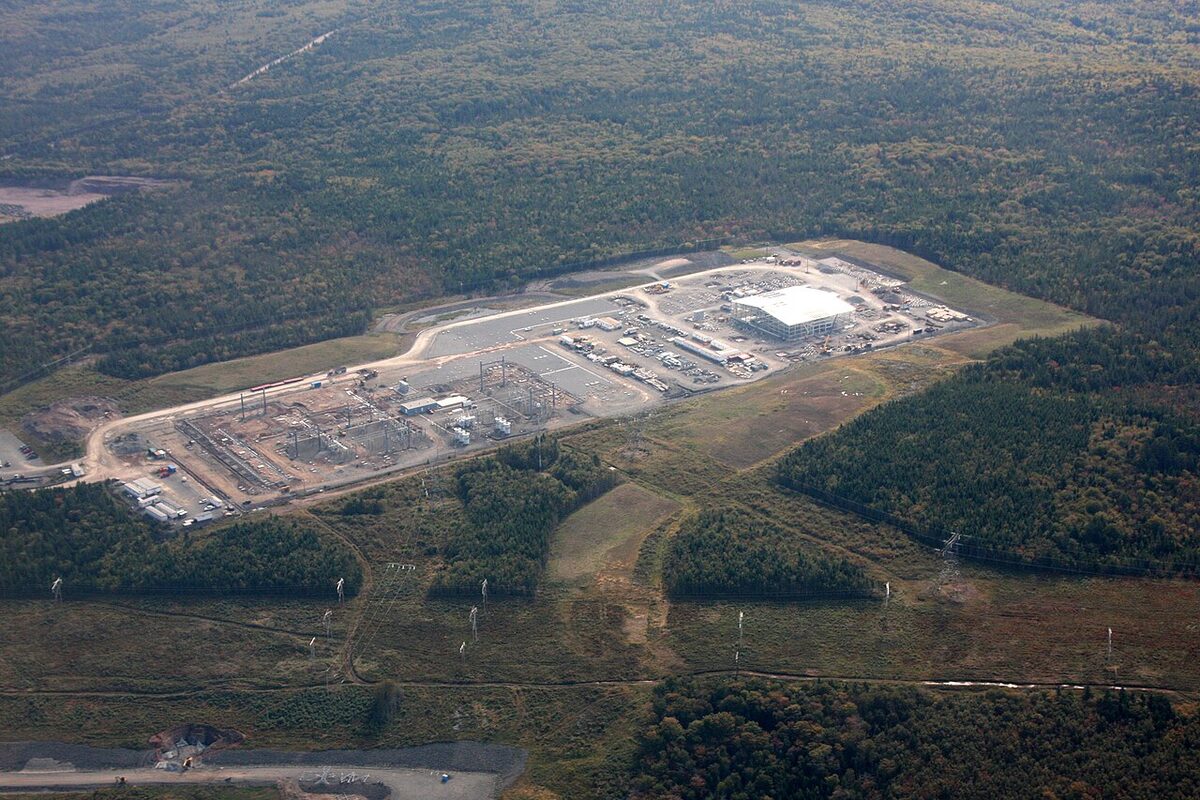
Intersect, a developer that pairs energy-intensive loads with dedicated generation, has reserved 1.5 GW of production from Heron Power Electronics. Heron makes a solid-state power conversion system meant to take the place of two familiar pieces of grid hardware: low-voltage inverters and medium-voltage transformers. Heron announced the agreement on Nov. 12, 2026. It said the units will be built at its Heron Factory One in Morgan Hill, Calif., and that deliveries are planned to begin in 2028.
Heron's announcement describes the deal as a solar deal. Its title calls it a reservation of manufacturing capacity "for Solar," and it says Heron Link will convert solar power directly to medium-voltage AC at Intersect's energy projects. The release does not say that any of the 1.5 GW will serve data centers. The deal matters to data center readers for two other reasons. Heron says its factory will supply power conversion equipment for data center infrastructure as well as solar and storage, and Intersect's business is built around putting generation next to large loads.
What Intersect Reserved
According to Heron's release, the arrangement is a manufacturing capacity agreement. Intersect has reserved 1.5 GW of Heron Link production, which the release describes as securing "a portion of the factory's capacity" for Intersect's projects. The release does not give a price, a unit count or a list of the projects that will receive the equipment.
Heron also said Intersect was its first "lighthouse customer" and a close technical and commercial collaborator. The release says that over the past 18 months Intersect's engagement helped shape Heron Link to meet the needs of large-scale energy developers.
What Heron Link Is
On a conventional utility-scale solar or storage site, power passes through several stages. Inverters convert DC from the panels or batteries to low-voltage AC. Transformers then step that AC up to medium voltage for the collection system or the grid connection. Heron says Heron Link combines the functions of low-voltage inverters and medium-voltage transformers into one modular, integrated 5-MW system.
The company says the system reaches 98.6% DC-to-medium-voltage efficiency. That is Heron's own figure, and the release does not say how or under what conditions it was measured.
Heron founder and chief executive Drew Baglino has described the technical approach to Latitude Media. He said Heron uses high-frequency silicon-carbide semiconductors to convert power electronically, which allows solid-state transformers to be controlled remotely for voltage regulation and load smoothing. By contrast, Latitude Media wrote, legacy high-voltage transformers rely on oil to cool copper coils and require in-person maintenance. Latitude Media also reported that Heron estimates its system will be 5% to 6% more valuable than alternatives over the lifespan of a project. That figure is a company estimate, and Latitude Media does not report independent verification of it.
Voltage regulation and load smoothing are the features that link this hardware to data centers. Latitude Media said Heron is testing its system in the real world over the next year, including at solar and data center sites, and that Baglino said "to be truly bankable, we need more real runtime in the field." Heron's release says only that the factory will supply power conversion equipment for data center infrastructure. It does not describe any specific data center deployment, and it does not say the Intersect reservation includes one.
The Morgan Hill Factory
Heron Factory One is the company's first commercial-scale production site. Heron gave these figures in the Nov. 12 release:
- A 286,000-square-foot facility in Morgan Hill, Calif.
- More than $100 million of investment
- Designed to produce up to 10,000 Heron Links a year, which Heron says represents more than 40 GW of manufacturing capacity
- Mass production planned to begin in late 2027
Earlier reporting gives the same figures. On Aug. 14, Interesting Engineering reported that Heron would invest more than $100 million to turn a former warehouse in Morgan Hill into a factory. It reported the site at 286,000 square feet, said production was expected to begin in late 2027, and said the company expects the plant to produce up to 10,000 Heron Links a year, which Heron says would represent more than 40 GW of annual capacity. It also reported that the project is supported partly by a $26.4 million California Competes award, a state tax credit.
In an Aug. 24 article, Latitude Media reported that Heron closed a $140 million Series B round in February. It said the company aims to start production in the second half of 2027 and eventually ramp up to 40 GW of capacity, or about 10,000 Heron Link systems. Latitude Media also named Intersect Power and the data center developer Crusoe as the two early customers Heron had disclosed at that time, and quoted Baglino as saying interest from solar, storage and data center customers is "well north of" the 40 GW planned for the first factory. That article predates the Intersect announcement.
The two numbers are on different scales. Intersect's 1.5 GW reservation is a small part of the more than 40 GW that Heron says Factory One is designed to produce. Factory One has not started mass production yet. Its stated capacity is a design figure, not current output.
Why It Matters to Data Center Readers
For readers following the data center buildout, the hardware is the main point. Latitude Media's headline calls Factory One Heron's first "transformer factory," and the article ties Heron's pitch to a years-long global shortage of transformers. Getting projects interconnected faster is the goal Latitude Media attributes to the technology.
Intersect's model of pairing large loads with dedicated generation is one reason the deal draws attention from this industry. Still, the agreement as Heron describes it covers solar conversion at Intersect's energy projects. Neither the release nor the independent coverage reviewed for this article ties the 1.5 GW to a named data center campus, a utility or a location.
Aggregator coverage, such as a BriefGlance summary, repeats the main facts from Heron's release: the 1.5 GW reservation, 5-MW units, deliveries beginning in 2028 and production in Morgan Hill. It also says Heron was founded in 2025. Its additional characterizations of the deal are commentary rather than independently reported detail, and this article does not rely on them.
What Is Still Unknown
- Which projects get the units. Heron's release does not name the Intersect projects, their locations or how many sites are involved.
- Commercial terms. No price, deposit or penalty terms were disclosed for the capacity reservation.
- Field performance. The 98.6% efficiency figure and the 5% to 6% lifetime value estimate both come from Heron. Neither the release nor Latitude Media describes independent testing, and Baglino said the company needs more field runtime.
- Data center deployments. Heron says Factory One will supply data center equipment and Latitude Media named Crusoe as an early customer, but the sources do not tie the Intersect reservation to any data center.
What Happens Next
According to Heron's release, mass production at Heron Factory One in Morgan Hill is planned to begin in late 2027, and deliveries to Intersect under the 1.5 GW reservation are planned to begin in 2028. Those are the only dated steps in the sources reviewed.
Sources
- Heron Power Electronics: Intersect Reserves 1.5 GW of Heron Link Manufacturing Capacity for Solar (Nov. 12, 2026)
- Latitude Media: How Heron Power plans to scale first transformer factory to 40 GW (Aug. 24, 2026)
- Interesting Engineering: California to get $100 million factory producing 40GW of advanced grid equipment (Aug. 14, 2026)
- BriefGlance: The 1.5 GW Bet on Solid-State: Heron and Intersect Rewrite Grid Hardware (Nov. 12, 2026)
