
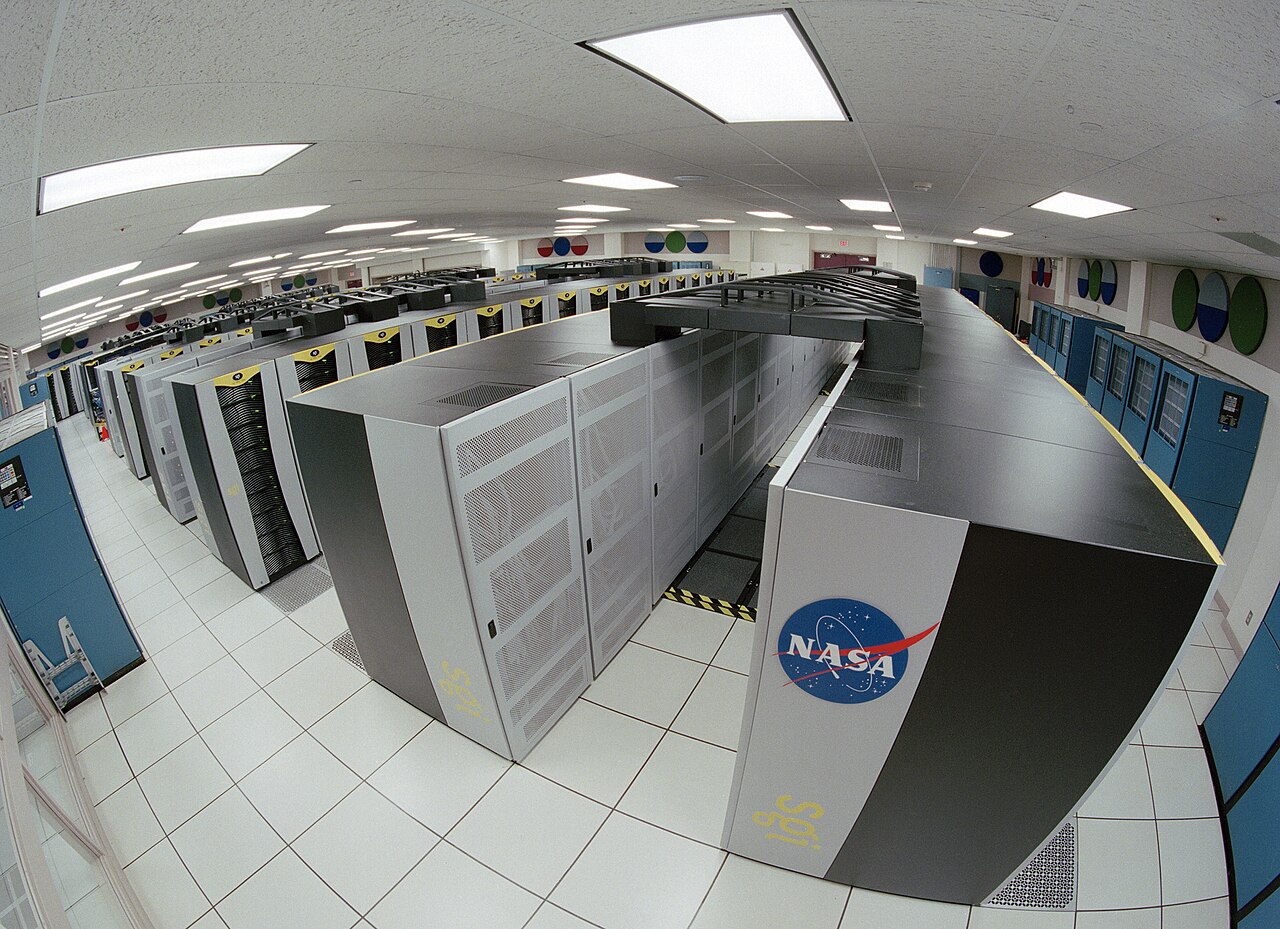
Nvidia used the SC26 supercomputing conference on Nov. 16 to make two announcements aimed at scientific computing. One is a rack built only from CPUs: 192 of its Vera processors, connected over Quantum-X800 InfiniBand. The other is a GPU called Rubin HPC, which the company expects to ship in 2028. According to Nvidia's announcement, Dell, HPE, Lenovo and Supermicro will begin offering the rack in early 2027.
The rack is the part with a near-term date and a named customer. The GPU is two years away, and the details that matter most for planning a facility have not been released.
What is in the Vera HPC rack
Nvidia gives these totals for the rack: more than 200 TB/s of aggregate peak memory bandwidth, about 300 TB of memory and 1 PB of storage. The company says the rack is fully liquid-cooled and is built on its MGX design. It reuses the chassis, power distribution and cooling of Nvidia's NVL72 systems. Each 1U tray holds eight CPUs.
Nvidia's specifications for each Vera CPU are 88 custom cores, which it calls Olympus, and 176 threads. Memory is SOCAMM2 LPDDR5X, with bandwidth of up to 1.2 TB/s per CPU.
Nvidia says the rack reuses NVL72 chassis, power distribution and cooling infrastructure, which it says is meant to simplify deployment and service. For operators already running NVL72 systems, that suggests some overlap in facility requirements, though that is an inference and will depend on each site's setup. Neither Nvidia's announcement nor the coverage gives a power figure for the Vera HPC rack, either in total or per tray.
StorageReview points out that this 192-CPU rack is not the same product as the 256-CPU Vera racks Dell and Supermicro announced earlier. Those were aimed at sandboxes for AI agents. The SC26 configuration is meant for simulation and other scientific work.
The performance claims, and who ran them
Nvidia's figures come from its own tests. It says Vera delivered 1.9x the performance and 2.4x the performance per watt of x86 systems on the OpenFOAM motorBike Large benchmark, a standard computational fluid dynamics test. For the WRF weather model, Nvidia projects 1.6x the performance and twice the efficiency.
StorageReview notes that these are vendor results that no outside party ran or audited, and that Nvidia did not name the x86 processors it compared against. The outlet also cites its own earlier review of Vera. In that test, a two-socket Vera system finished a large OpenFOAM mesh 1.44x faster than a 384-core AMD EPYC 9965 system and 1.20x faster than a 240-core Intel Xeon 6978P system.
The two sets of results do not measure the same thing. StorageReview's numbers compare complete two-socket systems on one mesh. Nvidia's compare against x86 systems whose processors it did not identify. Readers should not combine the figures or treat one as a correction of the other. For buyers, the independent numbers show a real advantage on that workload, but a smaller one than the vendor's headline figure.
A named customer: DKRZ
Nvidia said the German Climate Computing Center, DKRZ, has selected Vera for its next system, HLRE-5. Bull will build the machine, and Nvidia's announcement puts its arrival in early 2028. According to Nvidia, the system will also include NVIDIA GB200 Grace Blackwell systems and Quantum-2 InfiniBand, and will support climate simulation and AI research.
Nvidia also said its HPC SDK 26.11 software is available now. Nvidia says the SDK provides compilers and libraries optimized for Vera.
Rubin HPC: what was said and what was not
StorageReview and Techstrong.ai both report that the Rubin HPC GPU will have more than 50,000 CUDA cores and is expected in 2028. StorageReview adds that the chip includes sparse data acceleration and seventh-generation NVLink.
According to StorageReview, Nvidia said on stage that Rubin HPC triples performance on simulation and analytics. Nvidia did not say what that comparison was measured against. The outlet also reports that Nvidia has not published the GPU's memory capacity, FP64 throughput, power draw or system configurations.
FP64, or double-precision math, is the measure many traditional scientific codes rely on. Power and system configuration are what facility planners need to estimate rack density and cooling. Until Nvidia releases those numbers, Rubin HPC is a roadmap item, not a specification anyone can plan around.
The rest of the SC26 announcements
Techstrong.ai reports that Nvidia also announced Nemotron for Science, which includes an open model, a dataset and post-training tools, along with expanded CUDA-X libraries. The outlet also notes that interim CEO Colette Kress is preparing for the company's earnings call on Tuesday.
What it means for facilities
The rack's full liquid cooling and its reuse of NVL72 components suggest facility requirements closer to Nvidia's dense AI racks than to conventional air-cooled CPU clusters. For HPC centers and colocation providers, the announcements answer a few questions and leave others open:
- Cooling: Nvidia describes the rack as fully liquid-cooled. Halls without liquid cooling would need it added before hosting this rack.
- Power: No rack-level power figure appears in Nvidia's announcement or the coverage. The reuse of NVL72 power distribution is the only power detail Nvidia gave.
- Procurement: The racks will be sold by four OEMs: Dell, HPE, Lenovo and Supermicro. Neither Nvidia's announcement nor the coverage gives pricing.
- Benchmarks: So far the only independent performance data is StorageReview's earlier two-socket test. No independent tests of the full rack have been published.
What Happens Next
Nvidia says HPC SDK 26.11 is available now. Techstrong.ai reports that Nvidia's earnings call is on Tuesday. Nvidia's announcement says Vera HPC racks from Dell, HPE, Lenovo and Supermicro are expected to be available beginning in early 2027, and that the Bull-built HLRE-5 system for DKRZ is scheduled for early 2028. StorageReview and Techstrong.ai both report that the Rubin HPC GPU is expected in 2028. StorageReview reports those specifications have not been published, and none of the sources gives a date for them.
Sources
- NVIDIA Newsroom: NVIDIA Expands Vera CPU Platform to Accelerate Scientific Discovery (Nov. 16, 2026)
- StorageReview: NVIDIA SC26: Rubin HPC GPU With 50,000 CUDA Cores Due in 2028, 192-CPU Vera Racks in Early 2027 (Nov. 16, 2026)
- Techstrong.ai: Nvidia Unveils Rubin HPC GPU and Nemotron for Science at SC26 (Nov. 16, 2026)
