Madrone is a San Francisco startup with two founders and two prototypes. It says it can take mechanical chillers out of data center cooling. According to its Y Combinator company page, the company is in Y Combinator's Spring 2026 batch. It says it can cool a facility in Texas "using 30% less power and water" with what it calls novel dew-point cooling.
The pitch comes as liquid-cooled AI hardware is raising the temperatures at which facility water can be supplied. That shift could change which cooling equipment operators need. But the claims Madrone has made in public go well beyond what it has shown so far, and one recent headline about its backers goes further than the documented record supports.
What Madrone Says It Builds
Madrone's founders are Akshay Trikha (CEO) and Erik Meike (CTO), according to the Y Combinator listing. The company's launch post describes a modular cooling system for facility water that chills to the dew point. Data Phoenix describes the dew point as the temperature at which moisture in the air begins to condense. The launch post is titled as chiller-less cooling for desert data centers.
The launch post gives the reason for the product: up to 30% of facility power, it says, is diverted to cooling instead of GPUs. Voltgrid News reported that Madrone's own website uses a higher figure, saying up to 40% of data center power goes to cooling. The two company sources do not agree with each other.
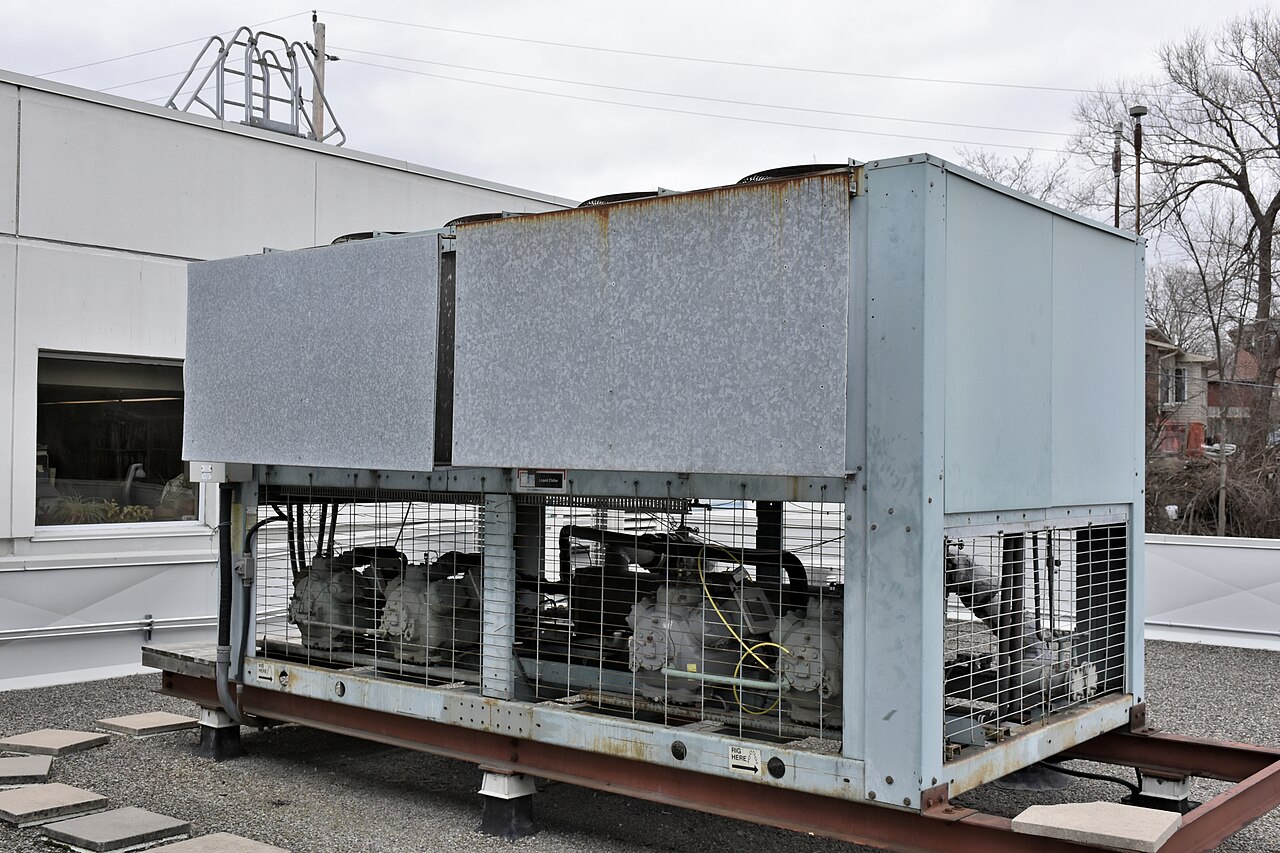
According to Data Phoenix, the equipment sits outside the building and is designed to supply water at 20C. That is the core of the claim: a dew-point cooler would produce water cold enough for the facility loop without a mechanical chiller.
The 30% Figure and What Is Missing
Madrone's main performance claim is that, in Texas, its system uses 30% less power and water than a conventional plant. Voltgrid News and Data Phoenix both describe that baseline as a chiller-and-cooling-tower system. Data Phoenix reported that Madrone's site gives no test method or measurements behind the figure, and Voltgrid News wrote that the site gives no test conditions or customer.
That matters for anyone weighing the claim. A cooling comparison depends on the conditions it assumes: outdoor temperature and humidity, the supply-water temperature, the IT load, the hours of operation, and what the baseline plant looks like. A Texas number without a stated location, season or load is hard to compare with anything else.
The hardware is also early. Data Phoenix reported that the founders described a 1 kW prototype and showed a 100 kW prototype they were building. Voltgrid News wrote that Madrone's pages describe only those two prototypes, so it is not confirmed as a working installation. Voltgrid News also noted that the launch post uses a 100 MW campus as a yardstick, and that 100 kW is 0.1% of that load, so the Texas saving has not been shown at hall scale.
The Nvidia Question
On Nov. 26, DatacenterDynamics headlined that Nvidia backs the startup, according to Voltgrid News, which said it could not read that report and so could not confirm the size, date or investors of any funding round. The documented record in the sources reviewed here is thinner than the headline.
Data Phoenix reported that Tekedia Capital announced an investment in Madrone and named Nvidia among the company's backers. That announcement gave no amount or closing date and did not say whether Nvidia had invested directly. Data Phoenix also noted that Madrone itself lists Nvidia's Inception program as a source of support, and that Inception is free and has no equity requirement. Voltgrid News likewise reported that Madrone's site lists the Nvidia Inception Program and Y Combinator as backers.
None of the sources reviewed for this article documents a direct Nvidia equity investment in Madrone. Being in Inception is not the same as Nvidia putting money into a company. On the published record, the only Nvidia link backed by readable sources is the Inception program.
Why 45C Liquid Cooling Is Part of the Story
The wider context is Nvidia's push toward warmer liquid cooling. Voltgrid News cited a Nov. 26 column by The Register from the SC26 supercomputing conference, which said Nvidia announced a 45C liquid inlet temperature for its parts. Most liquid-cooled systems have run at 30C to 35C, according to Voltgrid News. At 45C, the column argues, many sites that now need chillers could use rooftop dry coolers, with adiabatic assist during peak heat.
According to Voltgrid News, The Register's column cited published estimates and vendor modeling that put the cooling-energy cut at 50% to 70% against chiller-and-tower plants and the cut in total data center power at 10% to 20%, depending on starting power usage effectiveness and climate. Voltgrid News noted that these are estimates, not measurements from deployed sites.
Madrone's website makes a related claim. Voltgrid News reported that the site says the company's cooling enables Vera Rubin operation at 45C and above ambient without thermal throttling. Voltgrid News said neither source explains how Madrone's unit behaves at a 45C setpoint, since 45C is the inlet temperature Nvidia says its parts tolerate and 20C is the water Madrone says it supplies. Readers should treat the Vera Rubin claim as the company's own statement, without public test data behind it.
The tension is plain. If warm-water liquid cooling does let many operators drop chillers in favor of dry coolers, the problem Madrone wants to solve gets smaller at those sites. If climate, mixed hardware or hot-weather peaks still call for colder water, a chiller-free way to make it could have a market. The sources reviewed here do not settle which case applies, or where.
What Operators and Communities Can Take From This
For utilities and local officials, water and power claims from cooling vendors are worth testing with specifics: the climate data behind a percentage, the baseline it is compared with, and whether a figure comes from a measured installation, a model or a prototype. By the company's own account, Madrone is at the prototype stage. Its 30% figure has no published test conditions, and its 30% and 40% figures for cooling's share of power disagree.
What Happens Next
The sources describe a 100 kW prototype that Madrone showed under construction. Neither Madrone nor the reporting gives a completion date or a site for it. The company's Y Combinator page lists a TBPN YC Demo Day lightning round dated Nov. 2, 2026. The sources describe no confirmed customer installation and no scheduled public test release. Tekedia Capital's announcement gave no investment amount or closing date.