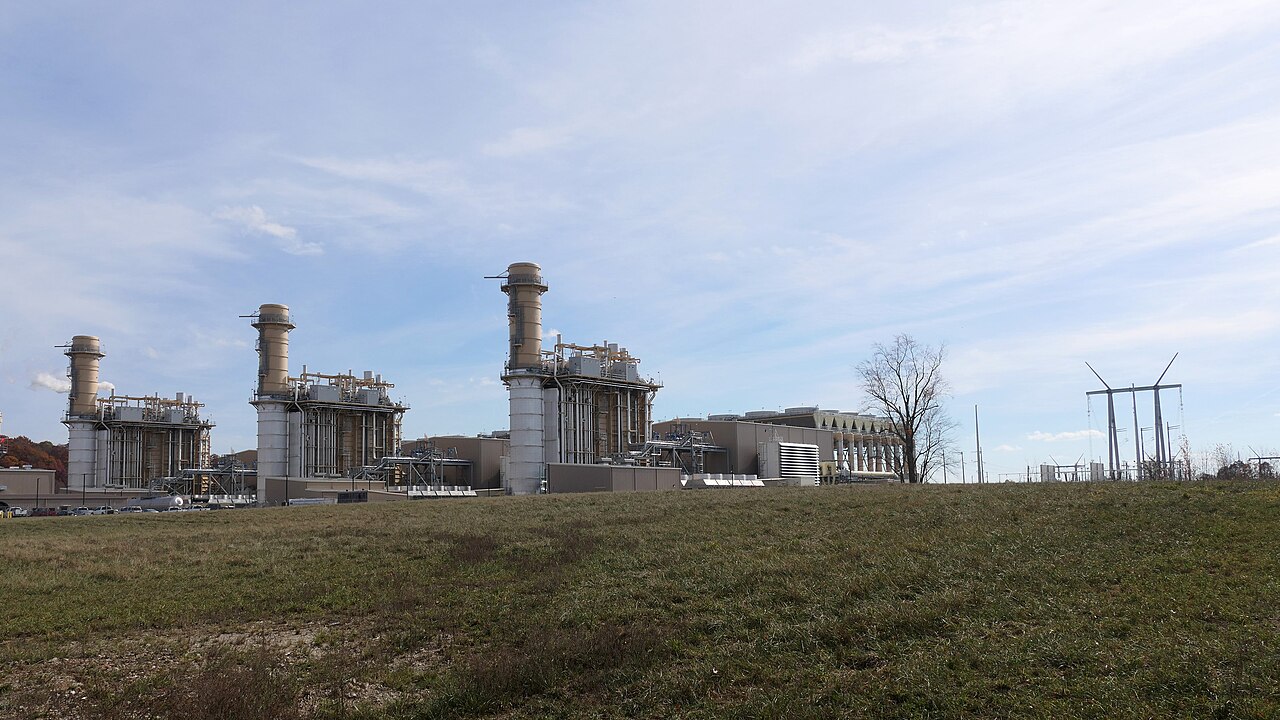
SB Energy, Inc., the SoftBank-backed developer of data centers and power, filed Amendment No. 3 to its Form S-1 registration statement with the Securities and Exchange Commission on Nov. 19, 2026. The amended prospectus describes a company that reports about $439 billion in backlog, has tied up an 8-gigawatt campus in southern Ohio and has a $1.5 billion prepayment from Nvidia, alongside a separate $1.5 billion Nvidia commitment in a private placement. It also says plainly that "No data center capacity is currently in operation."
The company has applied to list its shares on the Nasdaq Global Select Market and on Nasdaq Texas under the ticker "SBE." The amendment still leaves the price range blank, so the filing does not show how many shares will be sold or at what price.
Below is a walk through what the amended filing says, organized around the questions most likely to matter to utilities, local officials and people following the AI infrastructure buildout.
What does SB Energy actually have built?
On the data center side, nothing is in service yet. The S-1/A sorts its data center portfolio into three tiers.
- Under construction: 0.8 GW-IT. This tier includes the Cosmos Research Campus and Buildings 1 and 2 at the Milam County site, according to the filing. IPOScoop's summary of the prospectus says Cosmos is in Austin and is for SoftBank. It says the Milam County project, which it calls the Stargate Milam County Data Center, is near Burlington and Cameron, Texas, and is for OpenAI.
- Contracted but not under construction: 8.0 GW-IT. This is the PORTS-Pike Technology Campus in Pike County, Ohio. The filing describes it as 17 buildings totaling about 8.0 GW-IT.
- Additional pipeline: about 30.6 GW-IT, according to the S-1/A.
The company does own operating energy assets. As of Sept. 30, 2026, the filing says its operating power portfolio consisted of about 2.2 GW of solar and battery energy storage projects.
How is the $439 billion backlog built up?
The amended prospectus puts total backlog at about $439 billion. It says about $430 billion of that comes from the data center segment and about $10 billion from power. IPOScoop's summary of the earlier filing dated the backlog figure to Aug. 31, 2026.
The filing says the PORTS-Pike campus constitutes a substantial majority of the data center backlog, and it calls the backlog "a hypothetical estimate based on management's assumptions" that is "not necessarily indicative of future revenue." The figure measures contracted future revenue, not revenue earned.
What is planned in Pike County, Ohio?
The PORTS-Pike Technology Campus is the largest single item in the filing. IPOScoop describes it as an OpenAI-leased facility near Piketon. The filing says each of the 17 buildings is subject to a separate 20-year lease and that the campus is supported by about 10 GW of gross power load, supplemented by an initial build-out of about 9.2 GW of gas-fired generation. W.media, reporting separately in August, also described a 20-year OpenAI lease at the Ohio campus, with 8 GW of IT capacity and 10 GW overall.
The amended S-1 names Nvidia as residual value guarantor at PORTS-Pike. The filing also includes two caveats about power that matter to Ohio regulators and nearby residents:
- Utility service agreements for 9.2 GW of capacity are "subject to final regulatory approvals," according to the S-1/A.
- The campus's gas-fired generation facilities are "not yet financed or constructed and subject to permits and approvals," the filing states.
So the Ohio project is contracted with a tenant, but its utility arrangements still need final regulatory sign-off, and its on-site generation has not been financed or built. The filing excerpts reviewed here do not give a construction start date for the campus.
What is Nvidia's role?
Nvidia has several roles in the amended filing. It is a residual value guarantor at PORTS-Pike. It has also contractually committed to buy $1.5 billion of non-voting Class N common stock in a private placement at the IPO price, contingent on the offering closing. Separately, it prepaid $1.5 billion under a prepaid forward contract dated Aug. 17, 2026, for Class N stock at 90% of the IPO price. The filing says Nvidia will invest $3.0 billion in total in connection with the offering.
W.media and IPOScoop, both writing about the original filing, described only the $1.5 billion private placement at the IPO price. Readers comparing those accounts with the Nov. 19 amendment should rely on the current filing, which sets out both arrangements.
What do the financials show?
For the nine months ended Sept. 30, 2026, the S-1/A reports revenue of $177.1 million. Net loss attributable to the company was $1,913.7 million, or about $1.91 billion.
Most of that loss came from non-cash items. The filing lists a $1,202.8 million non-cash expense for the change in fair value of its warrant liability and $593.6 million in stock-based compensation, together about $1.80 billion. Excluding non-cash changes in the fair value of its warrant and prepaid forward contract liabilities and stock-based compensation, the filing reports a net loss of $117.3 million.
W.media reported that the OpenAI warrant liability was $5.5 billion at June 30, 2026, up from $3.6 billion when the warrants were issued in January 2026. It also reported, citing the prospectus, that pricing the IPO unlocks a tranche of those warrants. Changes in that liability's fair value pass through the income statement, which is why a mostly non-cash charge dominates the reported loss.
What valuation has been reported?
The company has not set one. Without a price range or share count, the amended S-1 does not imply a market value. W.media noted that Reuters reported in May 2026, citing people familiar with the matter, that SB Energy was targeting a $50 billion valuation. That figure does not appear in the filing.
W.media lists J.P. Morgan, Goldman Sachs, Morgan Stanley, Citigroup and Mizuho as joint lead book-running managers.
Why it matters beyond the IPO
For utilities and local officials, the filing is a public, on-the-record account of how a developer of this size describes its own exposure. In the documents reviewed here, the Ohio campus depends on utility agreements that still need final regulatory approval and on gas generation that has not been financed. The Texas campuses are under construction, but none of the company's data center capacity is operating. Those caveats come from the company's own securities disclosure.
For readers in Pike County and the Texas communities named in the filing, the prospectus is also one of the few documents that sets out each project's status and scale in a single place, alongside the main contracted tenants: OpenAI and SoftBank.
What Happens Next
The amended registration statement still has no price range or share count, and the offering has not been priced. None of the sources gives a date for pricing. Under the Nvidia agreements described in the S-1/A, the price of the Class N stock is tied to the IPO price: at the IPO price for the private placement and at 90% of it for the prepaid forward.
Separately, the 9.2 GW of utility service agreements for the Ohio campus remain subject to final regulatory approvals, according to the filing. The sources do not give a date for those approvals.